Climbing Belay Device Types: Tube, Assisted-Braking, Guide Plates and Figure 8s
Published How we research
Climbing belay devices fall into four main types: tube devices, guide-mode plates, assisted-braking devices (passive or mechanical) and figure 8s. Tubes and guide plates rely entirely on the brake hand, assisted-braking devices add a pinch on the rope when it is loaded suddenly, and figure 8s are now used mostly for rappelling. The right type depends on where you climb, the rope diameter you use, and whether you need to rappel on two strands or belay a follower from above. None of them works hands-free: with every type, the brake hand stays on the rope. This article explains how each type works, what it does well and where it falls short, so the product guides make more sense.
Products from this article
The highest-scoring picks from the buying guides this article links to. Scores are our editorial assessment, not customer ratings.
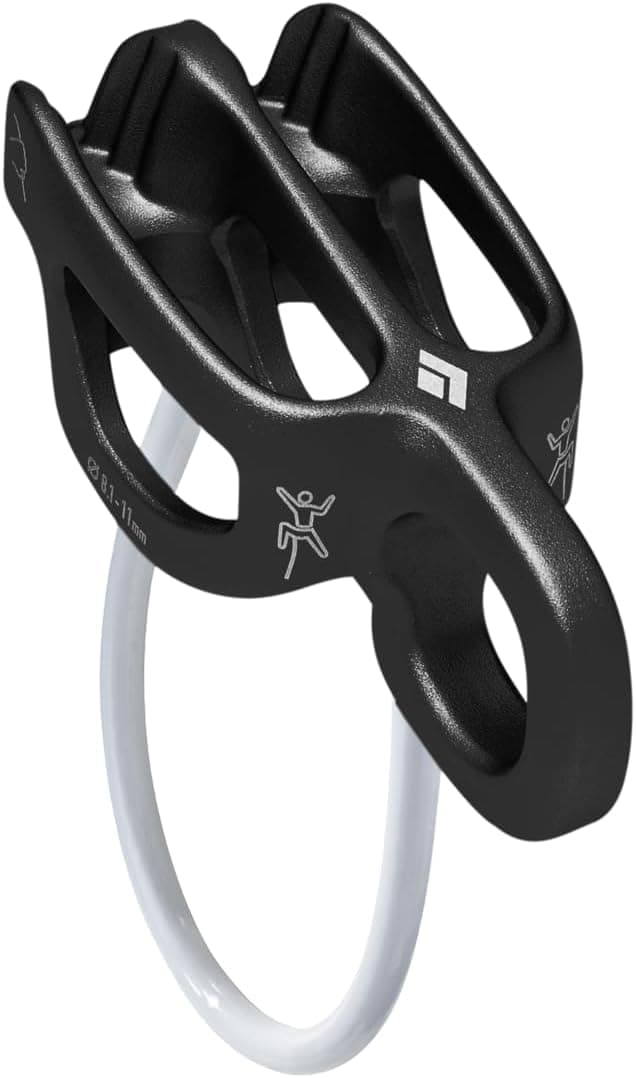
+ Guide mode lets you belay a follower directly off the anchor
From our guide: Best Belay Devices
+ Assisted braking adds a margin of safety when catching falls
From our guide: Best Assisted-Braking Belay Devices
+ Doubles as a belay and rappel device, saving weight on long routes
From our guide: Best Rappel Devices
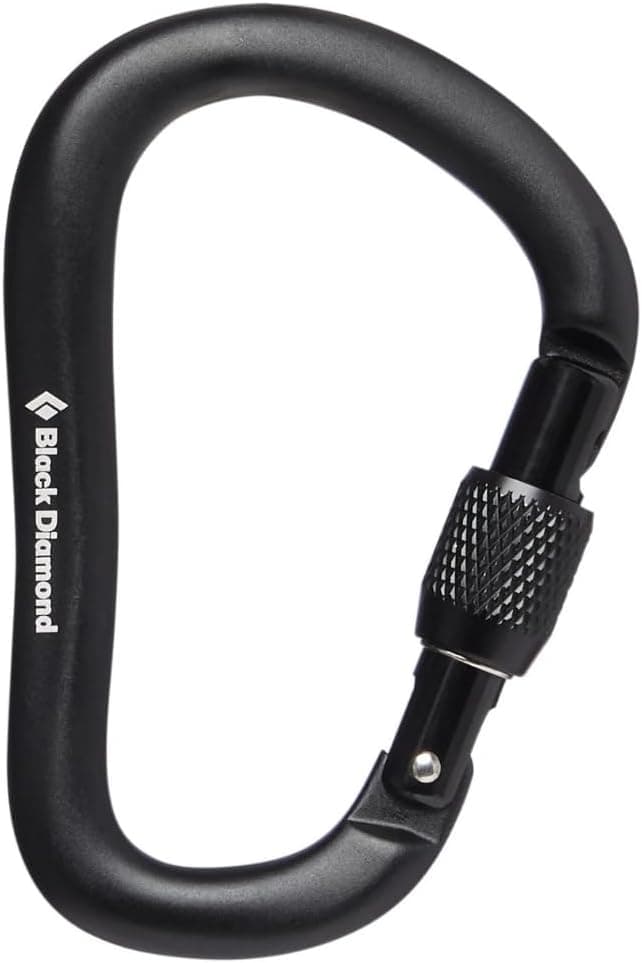
+ Pear shape gives room for a Munter hitch or GRIGRI loading
From our guide: The Best Locking Carabiners
Tube devices: the simple all-rounder
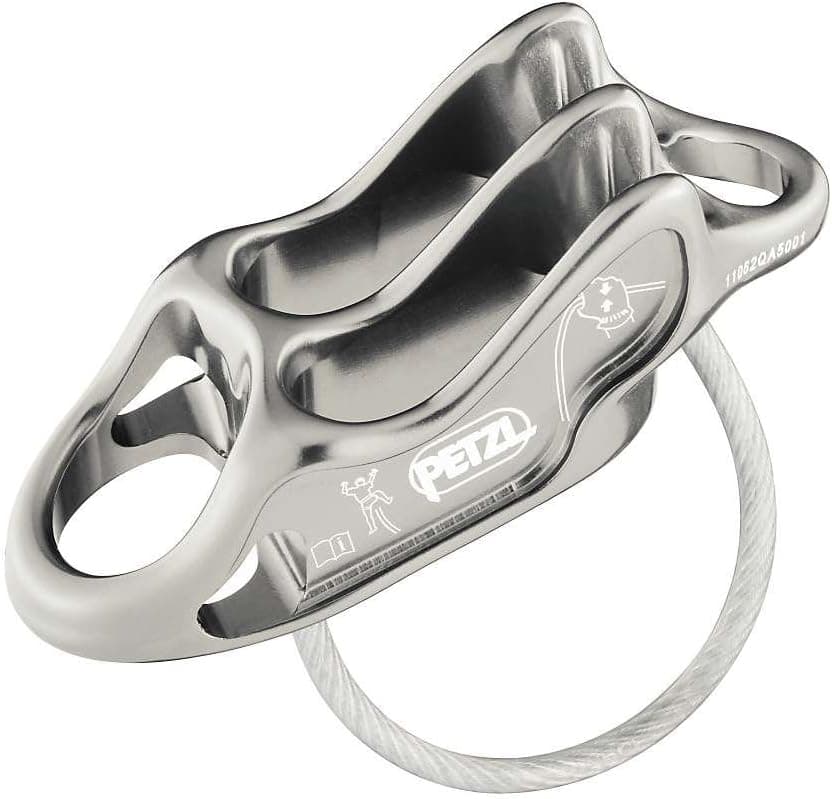
A tube device is a small aluminum block with one or two slots. A bight of rope goes through a slot and into a locking carabiner on the belay loop, and the sharp bend this creates produces friction. Pull the brake strand down and the bend tightens. Lift it and rope feeds freely. There are no moving parts, so there is little to wear out or jam, and a tube typically weighs 60 to 90 grams and costs less than any other type.
Most tubes have two slots, which is what lets you rappel on both strands of a doubled rope or belay with half or twin ropes. Many also have a high-friction side with V-shaped grooves for thinner ropes or heavier climbers, and a smooth side for thick, fuzzy gym ropes. The limits are simple: all of the holding power comes from the belayer's grip and position, and holding a climber who rests on the rope for minutes at a time is tiring. Each device is marked with the rope diameters it accepts, so check that range against your rope.
Guide-mode plates for multipitch
A guide-mode plate is a tube device with two additions: a large reinforced eye for hanging the device directly from an anchor, and a smaller hole used for releasing it. Used on the harness it behaves like any tube. Hung from the anchor, with the rope threaded so the climber's strand sits on top of the brake strand, it is designed to lock when a follower weights the rope. That lets a leader bring up one or two followers at once while managing the rope, which is why this type is the standard choice for multipitch trad and alpine routes.
The trade-offs are a little extra weight and a technique burden. Lowering a follower whose weight is on a locked guide plate is not intuitive: it uses the release hole and a redirected brake strand, and it needs to be learned and practiced with a qualified instructor before it is needed for real. Orientation also matters, since threading the rope the wrong way round in guide mode removes the locking effect. If you only climb single-pitch routes or indoors, the guide-mode eye is something you will carry and never use.
Passive assisted-braking devices
Passive assisted-braking devices look like a tube with a longer nose or a thumb loop, and they have no moving parts. When the rope is loaded suddenly, the carabiner is pulled into a slot or along a groove and pinches the rope against the device body, which adds braking force to what the brake hand provides. To pay out slack you tilt or lift the device with the thumb of the brake hand. Some models have a single slot for single ropes only, others have two slots and also handle two-strand rappels.
They are light, usually 65 to 125 grams, and cost much less than mechanical devices. Two things need attention. First, the braking effect depends on the carabiner: most makers specify a round-stock HMS locker, and some sell the device with a matched carabiner. Second, the pinch varies with rope diameter and condition, so a thin, new, dry-treated rope gets less assistance than a thick, worn one. The assistance is a backup to a correct belay, not a substitute for one.
Mechanical assisted-braking devices
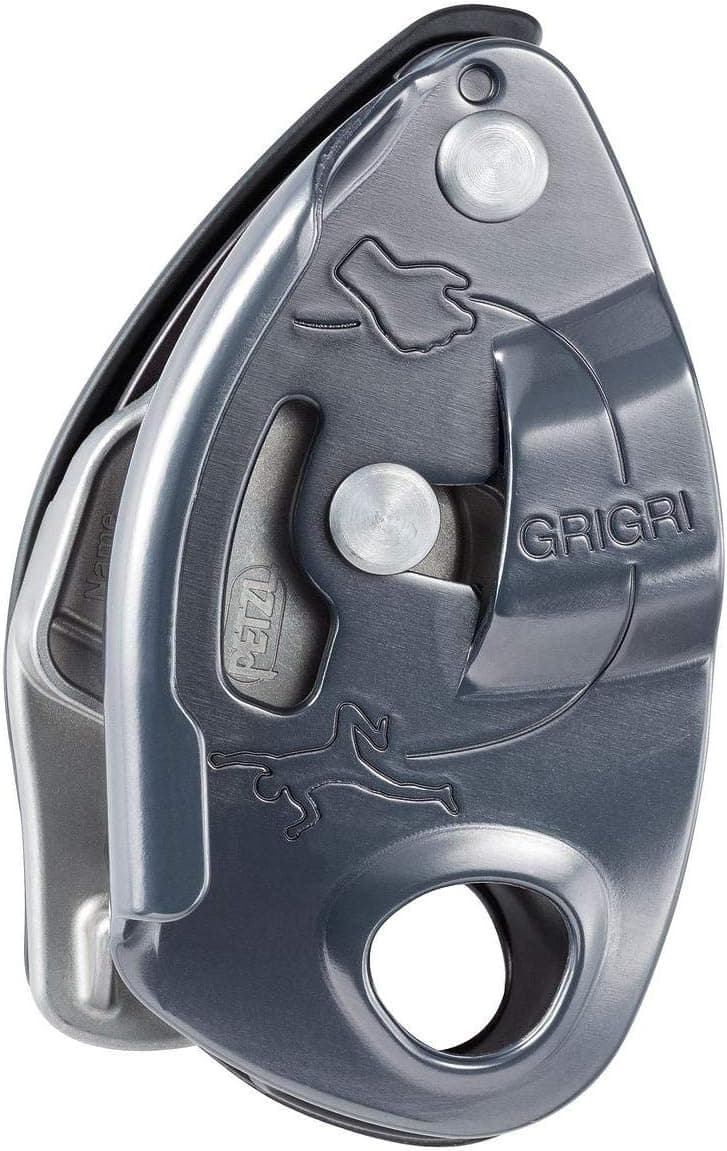
Mechanical devices put a pivoting cam inside a housing. A sudden pull on the climber's strand rotates the cam, which presses the rope against a fixed plate, and a handle releases the cam for lowering. These devices take one strand of single rope. Each model states its diameter range, commonly somewhere between 8.5 and 11 mm, often with a narrower optimum band marked on the device.
The appeal is comfort on routes where the climber hangs a lot: sport projecting, top-rope sessions and gym climbing. Holding a resting climber takes far less grip than with a tube, and lowering is controlled with the handle and the brake hand together. The costs are weight (often 170 to 250 grams), price, and two habits that have to be trained: feeding slack quickly to a leader without overriding the cam, and lowering smoothly without pulling the handle fully open. They cannot be used for a standard two-strand rappel, so multipitch climbers often carry a light tube as well.
Figure 8s and rappel-specific devices
A figure 8 is a forged aluminum ring with a larger and a smaller hole. The rope wraps through the large hole and around the neck, giving a smooth, fast rappel that copes with wet, muddy or icy ropes and sheds heat well. That is why it is still common in canyoneering, caving and rescue work. For belaying it has fallen out of favor: it gives less friction than a tube for holding lead falls, it twists the rope, and many gyms do not accept it at the belay check. If your interest is mainly rappelling, look at rappel-specific devices with adjustable friction instead of treating a figure 8 as a general belay device.
Matching a type to how you climb
For gym and single-pitch sport climbing, a mechanical or passive assisted-braking device is the common choice, and some gyms require one for lead belaying, so check the rules where you climb. For learning, many instructors start people on a tube, because it teaches the brake-hand discipline that every other device also depends on. For multipitch trad and alpine routes, a guide-mode plate covers leading, bringing up followers and two-strand rappels in one piece. For half or twin ropes you need a two-slot device rated for thin diameters.
Whatever the type, three checks apply. The rope diameter must sit inside the range marked on the device. The locking carabiner should be the shape the maker recommends, usually a pear-shaped HMS, and belay carabiners with an anti-crossload feature help keep it oriented. And a new device changes how slack feeds and how lowering feels, so practice with it on a top rope, close to the ground, before using it for lead belaying.
Frequently asked questions
Is an assisted-braking device safer than a tube? It adds braking force if the belayer is caught off guard, which is why many climbers and gyms prefer it. It does not make a belay hands-free, and accidents are reported with every device type. Correct technique, an attentive belayer and a rope inside the device's diameter range matter more than the category.
Can one belay device do everything? A two-slot guide-mode plate comes closest: it belays a leader, brings up followers from an anchor and rappels on two strands. What it lacks is assisted braking for long hangs on a sport project. Many climbers end up with two devices: an assisted-braking device for cragging and the gym, and a light tube or guide plate for multipitch days.
Does rope diameter change which device I need? Yes. Every device is marked with a diameter range, and behavior changes across it. Thin ropes run faster and get less friction, while thick ropes can be hard to feed through a mechanical device. A 9.2 mm rope in a device with an 8.9 mm lower limit is inside the range, but it will feel quicker than a 10 mm gym rope did in the same device.
Do I need a special carabiner? You need a locking carabiner, and for passive assisted-braking devices the shape and stock diameter affect how well the device pinches the rope. Follow the carabiner recommendation in the device instructions instead of using whichever locker happens to be free on your harness.
Popular right now
- The Best Climbing Nuts and StoppersBuying guide
- Best Belay DevicesBuying guide
- Best Headlamps for ClimbersBuying guide
- Bouldering vs Rope ClimbingArticle
- Climbing Photography BasicsArticle
- The Best Climbing SalvesBuying guide
Based on the last 28 days of search and visitor data.