Climbing Rope Diameter Chart
Published How we research
Rope diameter drives almost everything about how a rope handles: weight per metre, durability, how it feeds through a belay device, and what it is certified for. This chart lists typical diameters by discipline along with the certification symbols printed on every rope's end tag.
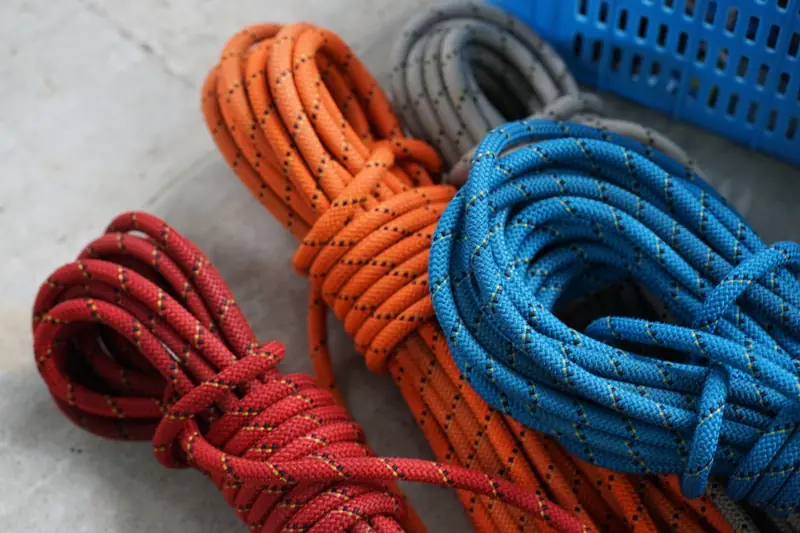
Single ropes: the default for most climbing
Marked with a circled 1 on the tag, single ropes are certified to be used alone. Typical diameters run 8.5mm to 10.2mm.
9.5-10.2mm: durable workhorse ropes for gym use, top-roping, and heavy projecting where abrasion resistance matters more than weight.
9.0-9.4mm: the common all-round sport climbing range, balancing weight and durability for most outdoor use.
8.5-8.9mm: lightweight single ropes for redpoint attempts and long routes, with shorter working lifespans and a requirement that your belay device handles thin ropes.
Half and twin ropes: two-rope systems
Half ropes, marked with a circled 1/2, are typically 8.0-9.0mm and clipped into alternating pieces of protection. They reduce rope drag on wandering trad routes and give two-strand rappels.
Twin ropes, marked with a circled infinity symbol, are typically 7.0-8.0mm and both strands clip into every piece together. They are lighter than half ropes but offer less drag management flexibility.
Many modern skinny ropes carry multiple certifications on one tag, meaning the same rope is rated as single, half, and twin depending on how it is used. Always read the symbols rather than assuming from diameter alone.
Diameter changes how a rope handles
Thinner ropes weigh less and feed faster, which helps on long approaches and hard redpoints, but they also wear out faster, are harder to grip when lowering, and generate less friction in a belay device, making a catch harder to control.
Belay device compatibility is the practical limit: every device lists a supported diameter range, and using a rope thinner than the device is rated for is genuinely dangerous. Assisted-braking devices in particular have narrow supported ranges, so check the device before buying a thin rope.
Static ropes are a different category entirely
Dynamic ropes, everything above, stretch to absorb fall energy. Static ropes (typically 9-11mm) barely stretch and are built for rappelling, hauling, fixed lines, and rescue work, not for lead climbing.
Taking a lead fall on a static rope transfers the full shock load to the climber, anchors, and gear, which is why the two categories must never be substituted for each other regardless of similar diameters.
Popular right now
- The Best Climbing Nuts and StoppersBuying guide
- Best Belay DevicesBuying guide
- Best Headlamps for ClimbersBuying guide
- Bouldering vs Rope ClimbingArticle
- Climbing Photography BasicsArticle
- The Best Climbing SalvesBuying guide
Based on the last 28 days of search and visitor data.