What to Wear Rock Climbing, From Gym Sessions to Outdoor Days
Published How we research
Showing up to a climbing gym in stiff jeans and a loose hoodie is a common first-day mistake, and it makes everything feel harder than it is. Climbing asks you to lift a knee to your chest, reach overhead and sit in a harness, so clothes that restrict those movements get in the way fast. The good news is that you do not need a special wardrobe to start. A few stretchy, close-fitting pieces you already own will often do the job. This guide covers what works indoors, what changes outdoors, and which items are worth buying once you climb regularly.
Products from this article
The highest-scoring picks from the buying guides this article links to. Scores are our editorial assessment, not customer ratings.
As an Amazon Associate we earn from qualifying purchases. This does not change our picks. Affiliate disclosure
New to Prime? Try Prime free for fast, free shipping on eligible items.
+ Ventilated inseam gusset and snap roll-up hems are described, helpful for high steps and warm days at the crag.
From our guide: Best Climbing Pants
+ Hood covers neck and ears on long exposed multi-pitch routes
From our guide: Best Climbing Shirts
+ Guide mode lets you belay a follower directly off the anchor
From our guide: Best Beginner Climbing Gear
+ Climbing-specific cut allows high steps and wide stems without binding
From our guide: Best Climbing Pants
Start with freedom of movement
The main test for any climbing outfit is simple: can you raise your knee high, stretch your arms overhead and squat down without anything pulling or binding? Fabrics with some stretch, such as cotton blends with elastane or synthetic athletic materials, usually pass that test. Rigid denim and tight chinos tend to fail it, especially when you need to place a foot high on a hold.
Fit matters as much as fabric. Very baggy clothes can hide your feet from your own view and catch on holds, while extremely tight clothes can limit your range. Something close to the body but not restrictive lets you and your belayer see what your hips and legs are doing.
Pants, shorts and tops for the gym
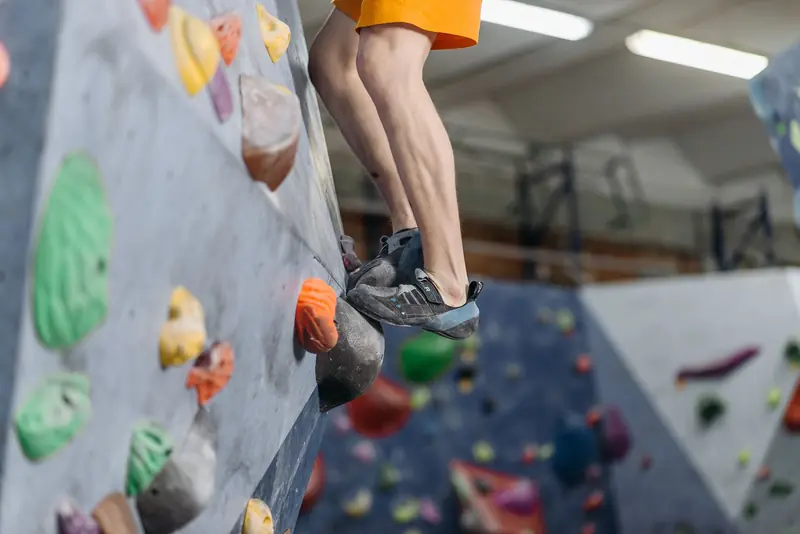
Indoors, most climbers wear athletic leggings, joggers with a tapered ankle, or shorts that sit above the knee. Longer shorts and wide hems can snag on your shoes, so a tapered cuff is a handy detail. For tops, a breathable t-shirt or tank works well, since gyms tend to be warm and you will sweat even on easy routes.
If you tie into a harness, avoid tops with loose hems that ride up and bunch under the waist belt. Thin, smooth fabrics sit more comfortably under webbing. Many brands make pants with a gusseted crotch and a stretchy waistband for this reason, and they can be a good upgrade later.
Pockets are another small detail. Zipped or deep pockets can catch on a hold, and items inside can press into your thighs when you are in a harness, so it is usually best to leave your phone and keys in a locker.
Layers for the crag
Outdoor climbing adds weather, rock and long waits between routes. Layers let you adjust. A light synthetic or merino base layer, a fleece or insulated jacket for belaying, and a wind or rain shell cover a wide range of days. Cotton soaks up sweat and stays damp, so many climbers avoid it on cold or wet days, though it is fine on a warm one.
Sun protection counts too. A brimmed hat, a long sleeve shirt in a light fabric and sunscreen on exposed skin help on south facing walls. Rock and rough holds can scrape bare knees and elbows, so some climbers prefer lightweight long pants even in summer.
Shoes, socks and what to carry
Climbing shoes are the one specialized item most gyms rent for beginners, so you can skip buying them on day one. Wear thin socks or none with rental shoes, based on gym policy and your own comfort. Some people like very thin socks to cut down on foot odor and blisters. Check the facility's rules, because some ask for socks.
Outdoors, a pair of sturdy approach shoes or trail runners gets you to the base of the cliff, and you change into climbing shoes there. Pack water, snacks and a small first aid kit in a day pack, and bring a helmet if the route or area has any chance of falling rock.
Safety details people overlook
Remove rings, long necklaces and dangling jewelry before you climb. A ring can catch on a hold or on gear, and swelling fingers under load make it harder to take off. Tie back long hair so it stays clear of belay devices, ropes and your harness, since loose hair can get caught in moving hardware.
Keep drawstrings and loose cords tucked in or removed. Anything that hangs near a belay device is a potential snag. If you are unsure whether an item is safe, ask the gym staff or an instructor, because they see these issues often and can give advice specific to their facility.
Dressing for gym temperature and sweat
Climbing gyms vary a lot. Some are warm and humid in summer, and others feel cool in the morning before the crowd arrives. Bring a light layer you can pull on between attempts, because muscles cool down quickly while you rest or belay. Taking it off before you start a route keeps you from overheating on the wall.
Sweaty palms and a damp back are normal, so pack a spare shirt and a small towel. Moisture wicking fabrics dry faster than heavy cotton, which makes the post session ride home more comfortable. A clean, dry layer also helps if you plan to belay for a while afterward, when your body temperature drops.
What to buy first, and what to skip
If you climb once a week or more, stretchy pants and a few breathable tops are usually the best first purchase, followed by your own shoes and a chalk bag. Plenty of climbers wear ordinary workout clothes for months before buying anything climbing specific, so there is no rush.
Skip anything with metal studs, hard buttons or thick seams in the spots that touch the wall or your harness. Also skip brand new, unwashed gear for your very first session, since stiff fabric can feel restrictive. Wash and wear anything new at least once before you rely on it for a full day outdoors.
Popular right now
- The Best Climbing Nuts and StoppersBuying guide
- Best Belay DevicesBuying guide
- Best Headlamps for ClimbersBuying guide
- Bouldering vs Rope ClimbingArticle
- Climbing Photography BasicsArticle
- The Best Climbing SalvesBuying guide
Based on the last 28 days of search and visitor data.