Rab Men's Pulse Hoody Sun Protective Shirt for Hiking and Climbing Review (2026)
Updated September 21, 2026 · Research-based review
Our verdict
Rab's Pulse Hoody is an ultralight sun shirt built around a UPF 30+ fabric, prioritizing minimal weight and breathability over the higher UPF ratings heavier sun shirts offer. It suits climbers who want a shirt they barely notice on hot approaches rather than maximum sun protection.
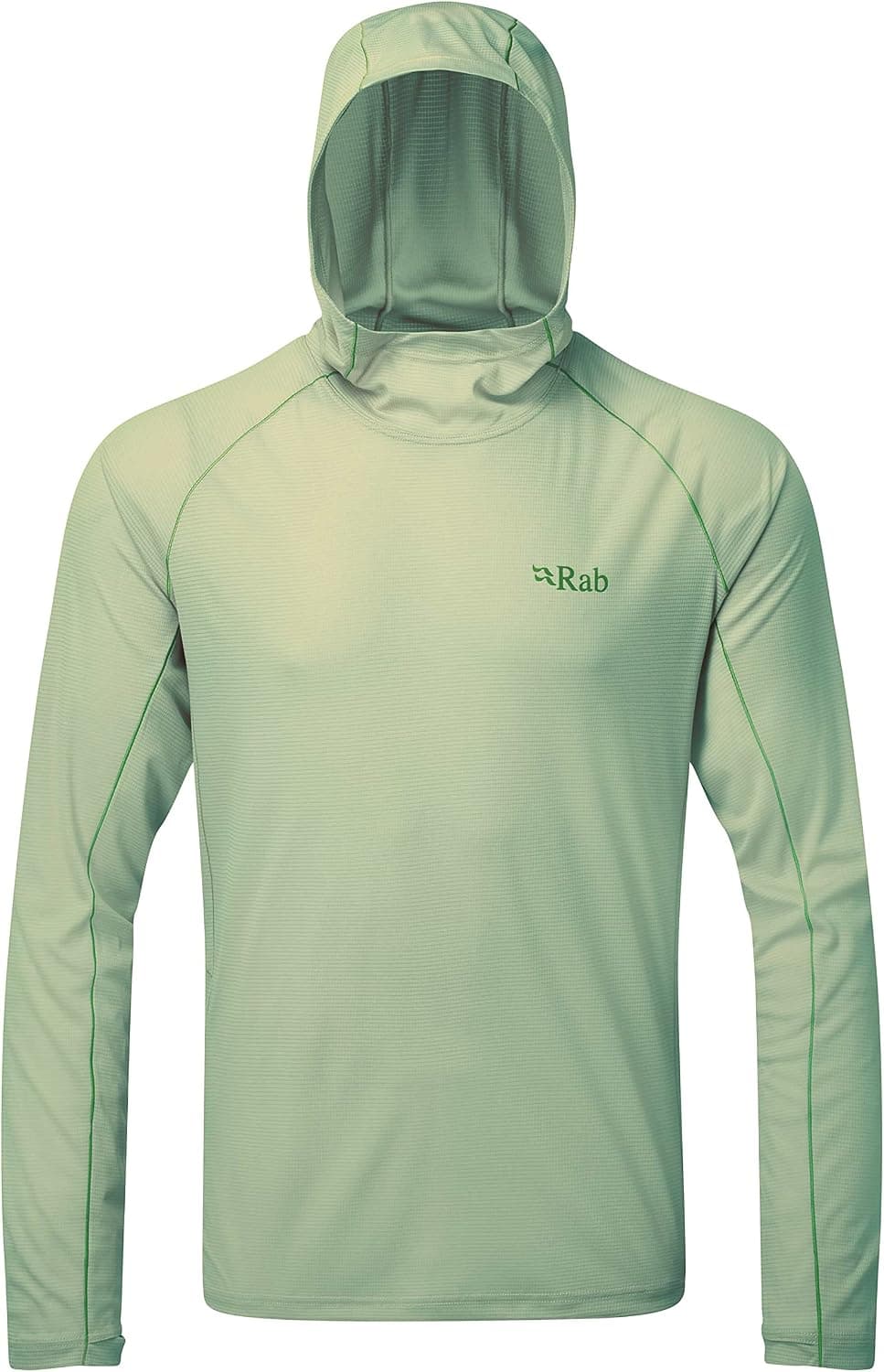
Rab's men's Pulse Hoody, a sun-protective technical shirt made for hiking and climbing in strong sunshine.
Price range: See on Amazon
What we liked
- + Hood covers neck and ears on long exposed multi-pitch routes
- + Climbing brand Rab designs the cut for reaching and overhead movement
- + Sun-protective fabric reduces the need to reapply sunscreen on the wall
Trade-offs
- - Hood can bunch under a helmet if the fit is not dialed
- - Costs more than generic sun hoodies with similar sun protection claims
Positioning as an ultralight sun layer
Rab builds the Pulse Hoody around being one of the lightest sun-protection shirts in its category, with an independent gear review measuring the shirt at about 117 grams, noticeably lighter than many competing sun hoodies. That weight comes from a thin, fast-drying fabric rated to UPF 30+, a lower rating than the UPF 50+ found on many heavier sun shirts, which is the core tradeoff of this shirt's design. Climbers who prioritize barely feeling a layer during long, hot approaches or multi-pitch days are the intended audience, more than climbers seeking maximum sun protection in a single layer.
Fit and hood design
The Pulse Hoody includes a full-coverage hood meant to protect the neck and ears during long exposed approaches or belay sessions in direct sun, along with low-bulk seams designed to avoid chafing when worn directly against skin for extended periods. An independent reviewer wearing a medium at roughly 5 feet 11 inches and 150 pounds described the fit as comfortable for all-day wear, with long enough arm length to suit taller climbers, and noted thumb loops on the cuffs that stay unobtrusive when not in use. As with most technical layers, fit can vary by body type, so checking a size chart before buying is worthwhile. The hood is cut close enough to layer under a climbing helmet without excess bunching, according to the same review, which is a useful detail for climbers who keep a helmet on through approaches and belays.
Sun protection tradeoffs
The UPF 30+ rating on the Pulse Hoody is meaningfully lower than the UPF 50+ found on many purpose-built sun shirts, and one independent reviewer noted the shirt offers roughly a third of the sun protection of some heavier alternatives while weighing far less. For climbers who burn easily or spend extended time on snow or high-altitude terrain with intense UV exposure, a heavier, higher-UPF shirt may be a better choice despite the added weight. For climbers in typical crag or trail conditions who want to minimize pack weight and bulk, the lighter UPF rating is a reasonable tradeoff most days.
Breathability and drying
Because the fabric is built thin specifically to save weight, it dries quickly after sweating or getting caught in light rain, and its minimal weight reduces the amount climbers notice the shirt during high-output activity like fast hiking to a crag or scrambling on approach. That same thinness means less wind resistance and less warmth than a heavier sun hoody would provide, so climbers moving into cooler, breezier conditions may want a layer to add on top rather than relying on the Pulse Hoody alone for warmth. It functions primarily as a sun and moisture layer rather than an insulating piece.
Who should buy it
The Pulse Hoody suits climbers and hikers who want the lightest possible sun layer for hot, high-output days and are willing to accept a lower UPF rating in exchange for that reduced weight and bulk. Climbers who burn easily, spend significant time on snow, or want maximum sun protection in one layer should look at a heavier UPF 50+ alternative instead. For most warm-weather crag days and approaches, the balance of low weight, quick drying, and adequate sun coverage makes this a reasonable choice from an established outdoor brand. Climbers who already carry sunscreen as backup and just want a light barrier against wind and direct sun will likely find the tradeoff worthwhile.
Frequently asked questions
What UPF rating does the Rab Pulse Hoody have?
UPF 30+, which is lower than the UPF 50+ found on some heavier competing sun shirts.
How much does the Pulse Hoody weigh?
An independent review measured it at about 117 grams, making it one of the lighter sun hoodies in its category.
Does the Pulse Hoody have thumb loops?
Yes, it includes thumb loops on the cuffs, described by one reviewer as unobtrusive when not in use.
Is this shirt warm enough on its own in cool weather?
It is built as a lightweight sun and moisture layer, not an insulating piece, so cooler or breezier conditions may call for an added layer.
Prices change often, so check the current price and availability on Amazon.
Check price on AmazonClimbing Nest may earn a commission from the link above.