Training on a Hangboard Safely
As an Amazon Associate I earn from qualifying purchases.
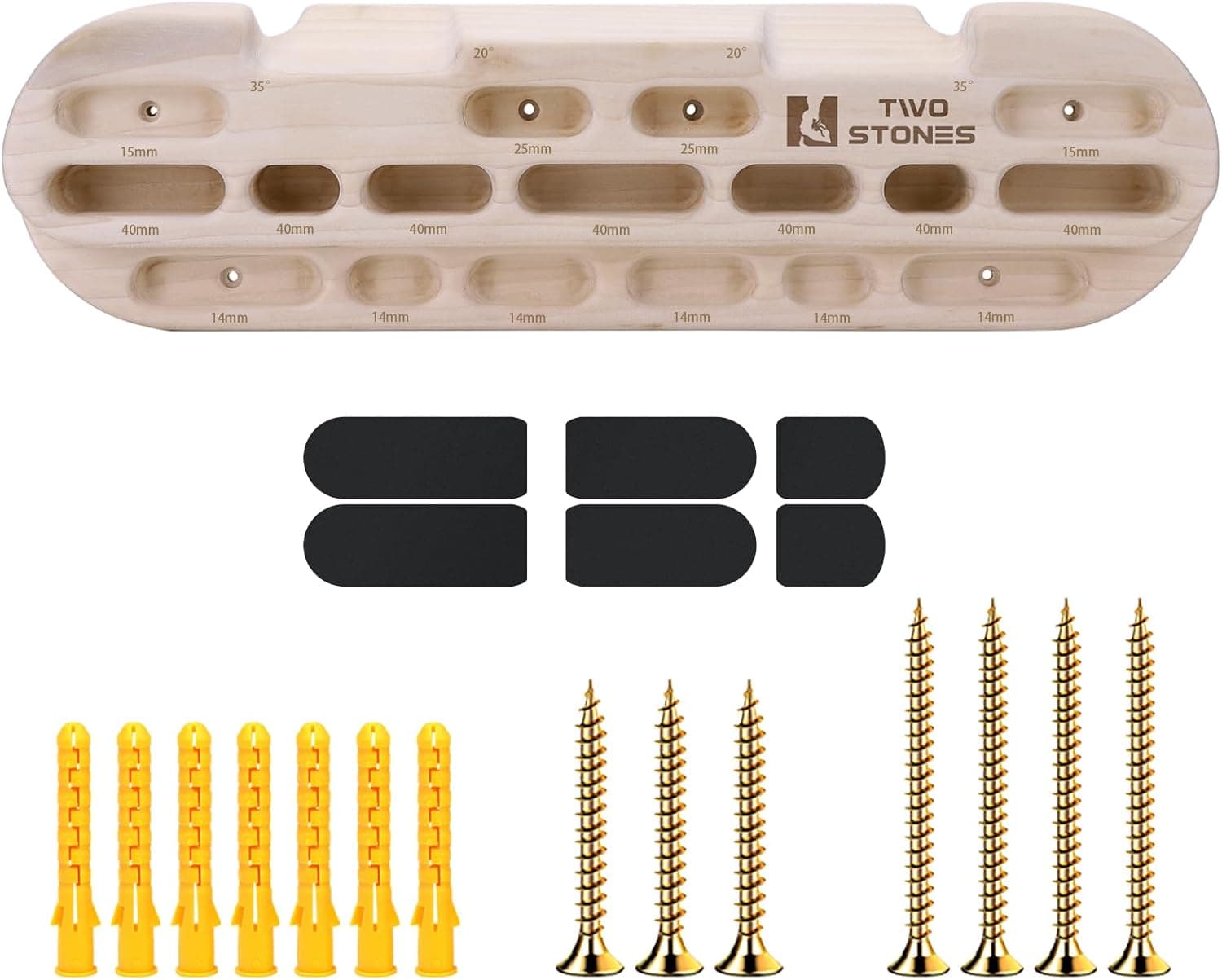
A hangboard, also called a fingerboard, is a piece of wood or resin with edges and pockets of various sizes that you hang from to strengthen your fingers. It is one of the most effective training tools in climbing, and also one of the easiest to misuse. The same qualities that make hangboarding efficient, isolated and repeatable loading of the fingers, make it risky for tissue that is not ready. Used with patience and structure, a hangboard is a career-long ally; used impatiently, it is a shortcut to injuries that steal months.
The first question is whether you should hangboard at all yet. The common guidance is that climbers benefit from hangboarding once climbing itself stops providing enough finger stimulus, which typically means at least one to two years of consistent climbing. Tendons and pulleys adapt slower than muscle, and early-stage climbers get stronger fingers from climbing alone, with far more technique benefit thrown in. If you are new, spend your training energy on climbing volume and footwork; the board will still be there.
When you do start, the setup matters. Use the largest edges on the board first, generally twenty millimeters or deeper, and grip them in an open or half-crimp position with shoulders engaged rather than hanging like dead weight from your joints. Warm up thoroughly beforehand with general movement and easy climbing or progressively harder hangs. If full bodyweight on an edge is too much, take weight off with your feet on a chair, a resistance band under a foot, or a pulley system; if it is too easy after months of training, small added weights come later. The ability to fine-tune load is exactly what makes the hangboard valuable, so use it in both directions.
A simple, widely used starting protocol is repeaters on big edges: hang for seven seconds, rest for three, repeat six times, then rest a few minutes, for three to six total sets. An even simpler alternative is a set of ten-second hangs at a comfortable load with generous rest. The specific numbers matter less than the principles: stop every hang well before failure, keep total session volume low, and progress load slowly over weeks, not days. One or two hangboard sessions per week is plenty, ideally on days when your fingers are fresh rather than stapled onto the end of a hard climbing session.
Listen to your fingers with more sensitivity than any other body part. Sharp pain, pain at the base of a finger, or joint pain during a hang means stop for the day, not push through. Persistent soreness that outlasts normal recovery means reduce load and volume. Skipping a planned session because your fingers feel tired is not weakness; it is exactly the judgment that separates climbers who train for decades from those who cycle through injuries. Keep a simple log of what you did and how it felt, because progression decisions are far easier with notes than memory.
Finally, keep the hangboard in perspective. Finger strength is one ingredient of climbing performance, alongside technique, body tension, endurance, and the head game, and the board trains only the first. The climbers who benefit most from hangboarding are those who treat it as a small, consistent supplement to actual climbing, not a replacement for it. Ten focused minutes twice a week, sustained patiently for years, outperforms every heroic protocol that ends in injury.