TRANGO Rock Prodigy Hangboard - Finger Training Board for Rock Climbing, Build Finger Strength, Forge Review (2026)
Updated September 14, 2026 · Research-based review
Our verdict
Trango's Rock Prodigy hangboard packs 16 edge positions and a split two-piece design into one training station, aimed at intermediate and advanced climbers running a structured finger strength program. Mounting it correctly takes real effort, and total beginners will find the edge count overwhelming.
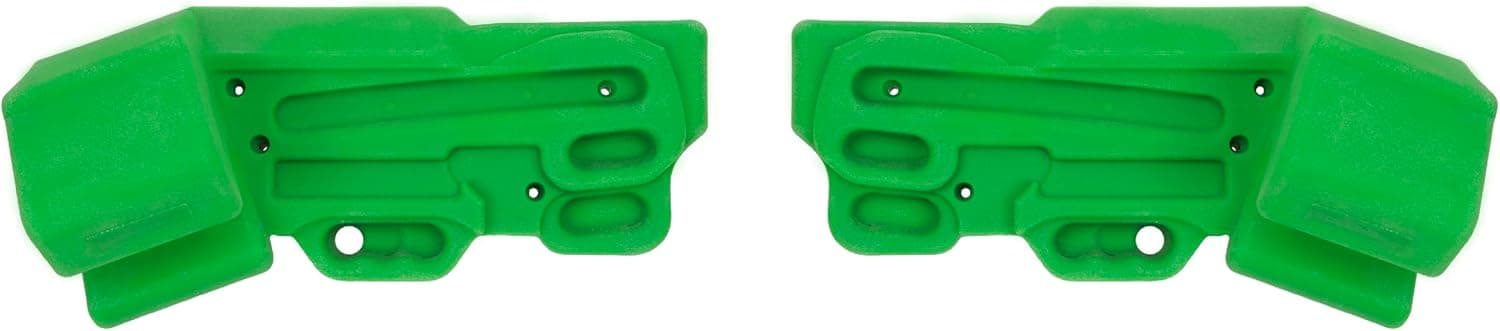
Trango's Rock Prodigy hangboard, a finger training board designed for building strength with structured programs.
Price range: See on Amazon
What we liked
- + Rock Prodigy design is based on popular training methods
- + Split board shape reduces strain on shoulders
- + Trango build is durable for serious training
Trade-offs
- - Mounting requires sturdy installation
- - Advanced grips may be too hard for beginners
Who this hangboard is for
The Rock Prodigy is built around the Rock Prodigy training method, a structured, progressive approach to finger strength that asks for a wide range of edge depths and grip positions rather than a handful of simple jugs. That makes it a better fit for climbers who already know how to structure a hangboard session and want the tools to follow a specific program, rather than someone hanging for the first time. Independent testing rates it a top pick for hold variety among plastic boards, calling out its horizontal pinches in three sizes as a standout feature since they force real thumb engagement instead of the easier grip you get from a vertical pinch.
The two-piece design and edge layout
Each half of the board measures roughly 9.1 by 12.1 inches, and the full unit weighs about 9.9 pounds. Splitting the board into left and right halves is the core design idea: you can space the two pieces to match your own shoulder width, which reduces strain during a hang compared with a single fixed board. Across the two halves you get 16 edge positions, plus sloping holds, warm-up jugs, and multiple pinch sizes, giving you enough variety to run months of a progressive program without repeating the same grip. Reviewers rate the edge shaping itself as some of the most comfortable among plastic boards, with rounded, ergonomic angles that spread pressure across your fingers rather than digging into a single point.
Mounting it and living with it
The split design that makes the board versatile is also what makes it harder to install. Independent testing scored it only 5.0 out of 10 for ease of mounting, since getting both halves level, correctly spaced and solidly anchored to a stud or doorframe takes more care than hanging a single-piece board. Trango's own installation guide recommends a doorway with enough clearance on both sides and above the frame so your elbows and body will not hit anything mid-hang, and warns against mounting near stairs or other hazards below. Because it is plastic rather than wood, the edges are rougher on skin, so expect some finger conditioning time before long sessions feel comfortable, and expect calluses to need normal recovery between hangs.
Trade-offs against other hangboards
The main trade-off is that the Rock Prodigy's edge sizes are non-standard compared with boards used in mainstream published protocols, so if you want to follow a program written around a specific commercial board's edge depths, you may need to adapt it. Against rivals in this guide, the YY Vertical SandwichBase plus VerticalBoard One is a no-drill option for renters who cannot mount permanently, while the Metolius Project Training Board CNC is a simpler, more compact board with fewer grip variations for climbers who want less choice and faster setup. The Rock Prodigy wins on sheer hold variety and edge comfort, but it asks more of your wall space and your mounting effort in return.
The bottom line
Buy the Rock Prodigy if you are past the beginner stage, already understand basic hangboard safety, and want a single board that can carry you through a multi-month structured finger training program. It earns our score of 8.6 out of 10 largely for edge variety and comfort. Skip it if you are new to hangboarding, since the sheer number of grip options can be overwhelming without guidance, or if you are renting and cannot commit to a permanent doorframe or stud mount, in which case a no-drill mounted board will suit your space better.
Frequently asked questions
How many edge sizes does the Trango Rock Prodigy hangboard have?
It has 16 edge positions across its two halves, along with sloping holds, warm-up jugs, and pinches in three sizes.
Is the Rock Prodigy hangboard good for beginners?
It is better suited to intermediate and advanced climbers who already understand hangboard training basics; the wide range of grip options can be overwhelming without a structured plan.
How hard is the Rock Prodigy to mount?
It is more involved than a single-piece board because you have two halves to level, space and anchor separately; independent testing rated it low for ease of mounting compared with simpler boards.
Does the Rock Prodigy edge sizing match other popular hangboard programs?
Its edge depths are specific to the Rock Prodigy training method and are not standardized to match every published program, so following an outside protocol may need some adaptation.
Prices change often, so check the current price and availability on Amazon.
Check price on AmazonClimbing Nest may earn a commission from the link above.