The Science of Climbing Training: An Evidence-Based Guide by Sergio Consuegra Review (2026)
Updated September 20, 2026 · Research-based review
Our verdict
The Science of Climbing Training by Sergio Consuegra, translated by Rosie Stainthorpe, is a 216 page paperback from Vertebrate Publishing that grounds climbing training in exercise and sports science. It rewards readers who want the reasoning behind a program, though the scientific density asks more of casual readers.
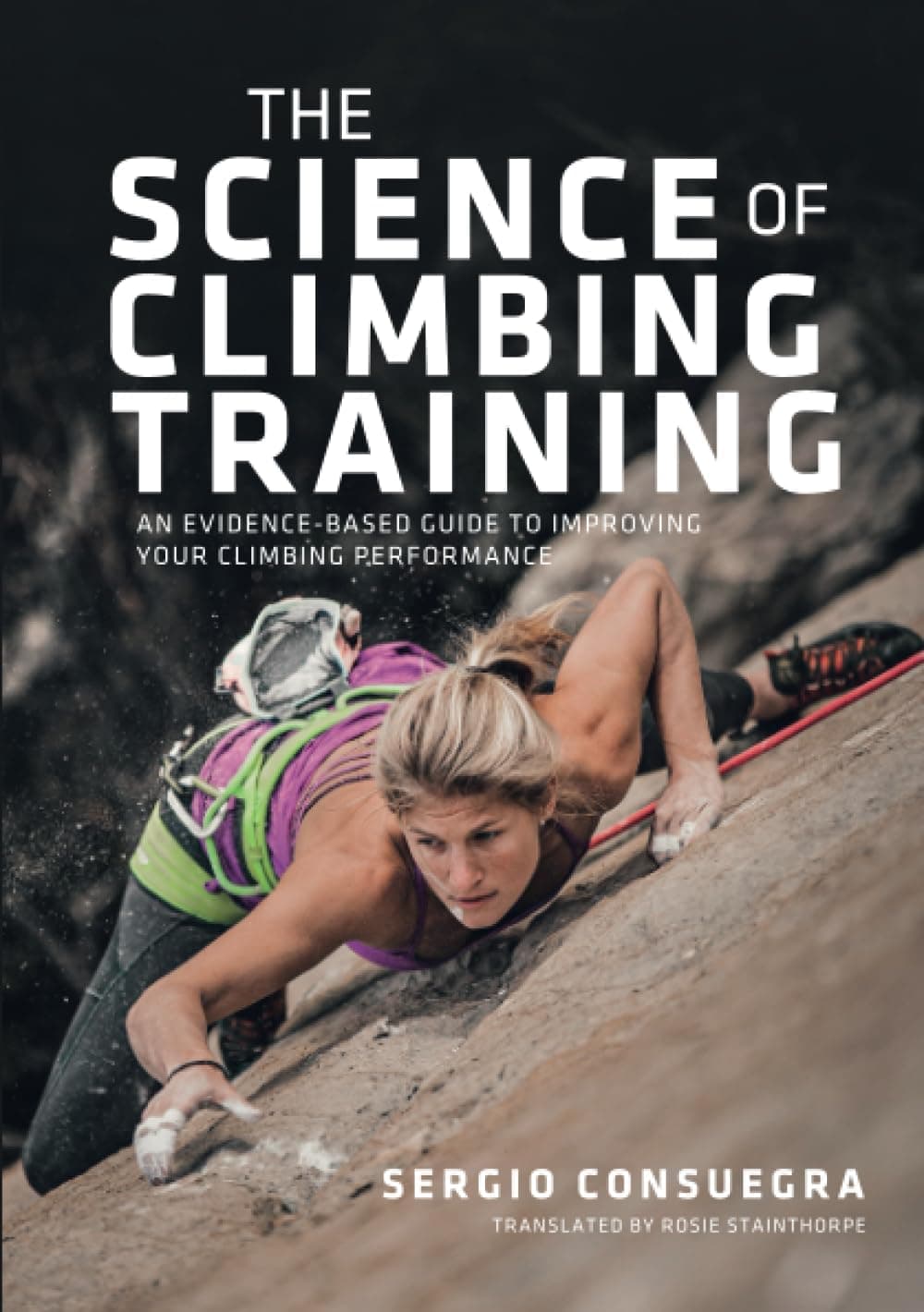
The Science of Climbing Training by Sergio Consuegra, an evidence-based guide that links research to practical training.
Price range: See on Amazon
What we liked
- + Evidence-based approach helps separate myths from proven methods
- + Explains why protocols work, not just what to do
- + Great for coaches and climbers who like understanding physiology
Trade-offs
- - Scientific detail can feel heavy for casual readers
- - Less focus on climbing technique and movement skills
What this book covers
The Science of Climbing Training was written by Sergio Consuegra, a Spanish climbing coach with a sports science degree from the Universidad Politecnica de Madrid, and translated into English by Rosie Stainthorpe for an international audience. Published by Vertebrate Publishing as a 216 page paperback, the book is structured in parts that first explain what training is and how physiological and biomechanical processes govern different training methods, then move into how to address specific needs such as finger strength and forearm endurance alongside general physical conditioning. The approach leans on exercise and sports science rather than anecdote, aiming to give readers a framework they can apply beyond the specific examples in the text.
The evidence-based approach
Consuegra fills the book with anatomical and physiological detail about muscles, tendons and the body's energy systems, backed by references to published research alongside his own coaching experience. That combination sets it apart from training books built mainly around one coach's personal system, since the explanations here aim to show why a given protocol works at a biomechanical level rather than simply listing sets and reps to follow. Readers get both the reasoning and the practical application, which suits climbers and coaches who want to adapt protocols rather than follow them exactly as written from start to finish.
Who benefits most
This book fits climbers and coaches who like understanding the physiology behind a training plan before committing to it, and who are comfortable reading through detailed anatomical and biomechanical explanations to get there. Coaches optimizing programs for multiple athletes are a natural audience, since the evidence-based framing gives a shared vocabulary for explaining choices to athletes across a squad and helps justify a program to skeptical climbers. Climbers who just want a simple weekly plan without the underlying science may find the density more than they need, and could be better served starting with a more prescriptive, workout-focused book instead of this one.
How it compares with other training books
Against The Rock Climber's Training Manual, which builds a single periodized system called the Rock Prodigy Method from the authors' own climbing, Consuegra's book leans harder on published sports science citations rather than one coach's applied program built from personal experience. Against Eric Horst's Training for Climbing, a broader survey of physical, technical and mental training, this book goes narrower and deeper into physiology specifically, spending more pages on the biomechanics behind each recommendation. It sits closer to a sports science reference translated for climbers than a step-by-step program, which changes how it gets used compared with the other training titles in this guide.
Who should buy this book
This book suits climbers and coaches who want to understand the physiological reasoning behind finger strength, forearm endurance and general conditioning work, not just a list of exercises to follow blindly without knowing why they work. It is a stronger fit for readers already comfortable with some training vocabulary than for someone picking up their first climbing training book. Given the site's own score placing it among the stronger training references in this category, it works well as a companion to a more workout-focused book like Beastmaking or The Climbing Bible, rather than a single, all-in-one program to follow on its own.
Frequently asked questions
Who wrote The Science of Climbing Training?
Sergio Consuegra, a Spanish climbing coach with a sports science degree, wrote it, and Rosie Stainthorpe translated it into English.
How long is the book?
216 pages, published by Vertebrate Publishing as a paperback.
Does the book include a specific workout plan?
It explains the physiological reasoning behind training methods and covers specific needs like finger strength alongside general conditioning, rather than a single fixed program.
Is this book better for coaches or for climbers new to training?
It suits coaches and climbers who want the science behind a program; those wanting a simpler plan may prefer a more prescriptive book.
Prices change often, so check the current price and availability on Amazon.
Check price on AmazonClimbing Nest may earn a commission from the link above.