Training for Climbing: The Definitive Guide to Improving Your Performance by Eric Horst Review (2026)
Updated September 14, 2026 · Research-based review
Our verdict
Now in its third edition, Eric Horst's Training for Climbing surveys physical, technical and mental training in one reference, drawing on decades of coaching to help climbers from new boulderers to seasoned leaders. Its broad scope is an accessible starting point, though topics get less depth than a book built around one system.
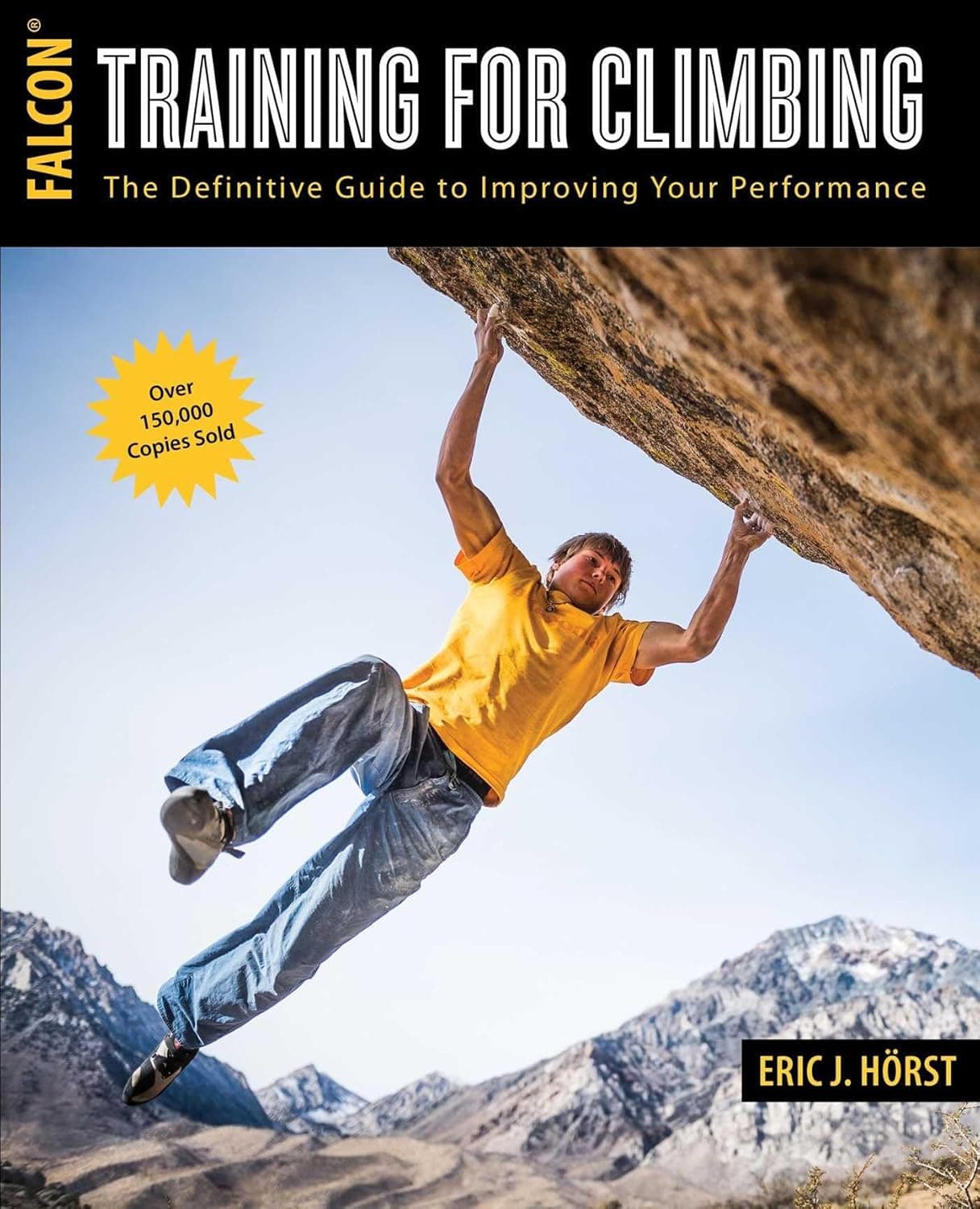
Training for Climbing by Eric Horst, a broad guide to strength, technique and mental skills for improving performance.
Price range: See on Amazon
What we liked
- + Covers physical, technical and mental training in one reference
- + Eric Horst is one of the most widely read climbing training authors
- + Useful for climbers from first-year boulderers to seasoned leaders
Trade-offs
- - Broad scope means individual topics get less depth than niche books
- - Some training ideas have evolved since earlier editions
What this book covers
Training for Climbing, subtitled The Definitive Guide to Improving Your Performance, is written by Eric Horst and now in its third edition, published under the How To Climb series and running roughly 335 pages. Rather than focusing on a single periodized system, Horst surveys the full range of what goes into climbing performance, physical strength and power training, technique and movement skill, mental game and fear management, along with nutrition, recovery and injury prevention, aiming to give readers a working understanding of every major piece rather than a single deep program to follow start to finish.
Horst's background and approach
Horst has written multiple editions of this book across more than three decades of climbing and coaching experience, and the book draws on both his own applied coaching work and broader sport science research rather than presenting a single method he personally developed and tested, which is the more common approach in narrower training manuals. That breadth means the book functions well as a reference a climber can return to for a specific topic, such as a hangboard protocol or advice on managing lead climbing fear, rather than a program meant to be followed cover to cover in sequence. Later editions have been updated to reflect changes in sport science and training practice since the book was first published, which keeps the guidance from feeling dated.
Who the book works well for
Because it covers physical training, technique and the mental side of climbing in one place, this book suits climbers at a wide range of experience levels, from a first year boulderer wanting a general understanding of how to train, to a longtime leader looking for a refresher on periodization or injury prevention basics. Its accessible, broad structure makes it easier to dip into for a specific chapter than a book built entirely around one detailed periodized system, which is useful for climbers who are not ready to commit to a rigid weeks-long training cycle.
How it compares with a periodization-focused manual
Against The Rock Climber's Training Manual by Michael and Mark Anderson, which goes deep into a single periodized system called the Rock Prodigy Method, Horst's book trades depth on any one topic for breadth across the full picture of climbing performance, including areas like mental training and injury prevention that a narrower strength-focused manual covers more lightly. Climbers who want one clear program to follow week by week may prefer the Anderson brothers' more structured approach, while those who want a broad reference to return to repeatedly for different topics over years of climbing will likely get more consistent use out of Horst's book. Many climbers end up reading both at different points in their training, since the two books solve different problems rather than competing directly for the same reader.
Who should buy Training for Climbing
This book suits climbers who want one well rounded reference covering strength, technique, mental training, nutrition and injury prevention rather than a single rigid program, and its long publishing history across multiple editions reflects how widely it has been read and referenced in the climbing training community. Climbers who already know they want a specific periodized strength program may get more direct value from a narrower book like the Rock Climber's Training Manual instead. Given our score of 8.6 out of 10, it remains one of the most accessible and broadly useful training books available to climbers at any level.
Frequently asked questions
What edition is this and how long is it?
The third edition, running roughly 335 pages, published under Falcon Guides' How To Climb series.
Does this book focus on one training program?
No, it surveys physical, technical and mental training broadly rather than presenting a single periodized system to follow start to finish.
Who is Eric Horst?
A climbing coach and author who has written multiple editions of this book across more than three decades of coaching and climbing experience.
How does it compare with The Rock Climber's Training Manual?
Horst's book covers a broader range of topics with less depth per topic, while the Rock Climber's Training Manual focuses deeply on a single periodized system, the Rock Prodigy Method.
Prices change often, so check the current price and availability on Amazon.
Check price on AmazonClimbing Nest may earn a commission from the link above.