The Climbing Bible: Technical, Physical and Mental Training for Rock Climbing by Martin Mobraten and Stian Christophersen Review (2026)
Updated September 14, 2026 · Research-based review
Our verdict
The Climbing Bible suits a climber past beginner level who wants one structured resource covering technique, physical training and mental approach together. Its main strength is that broad, integrated curriculum with hundreds of photos, and the trade-off is that it works better as a home study text than a quick crag-side reference.
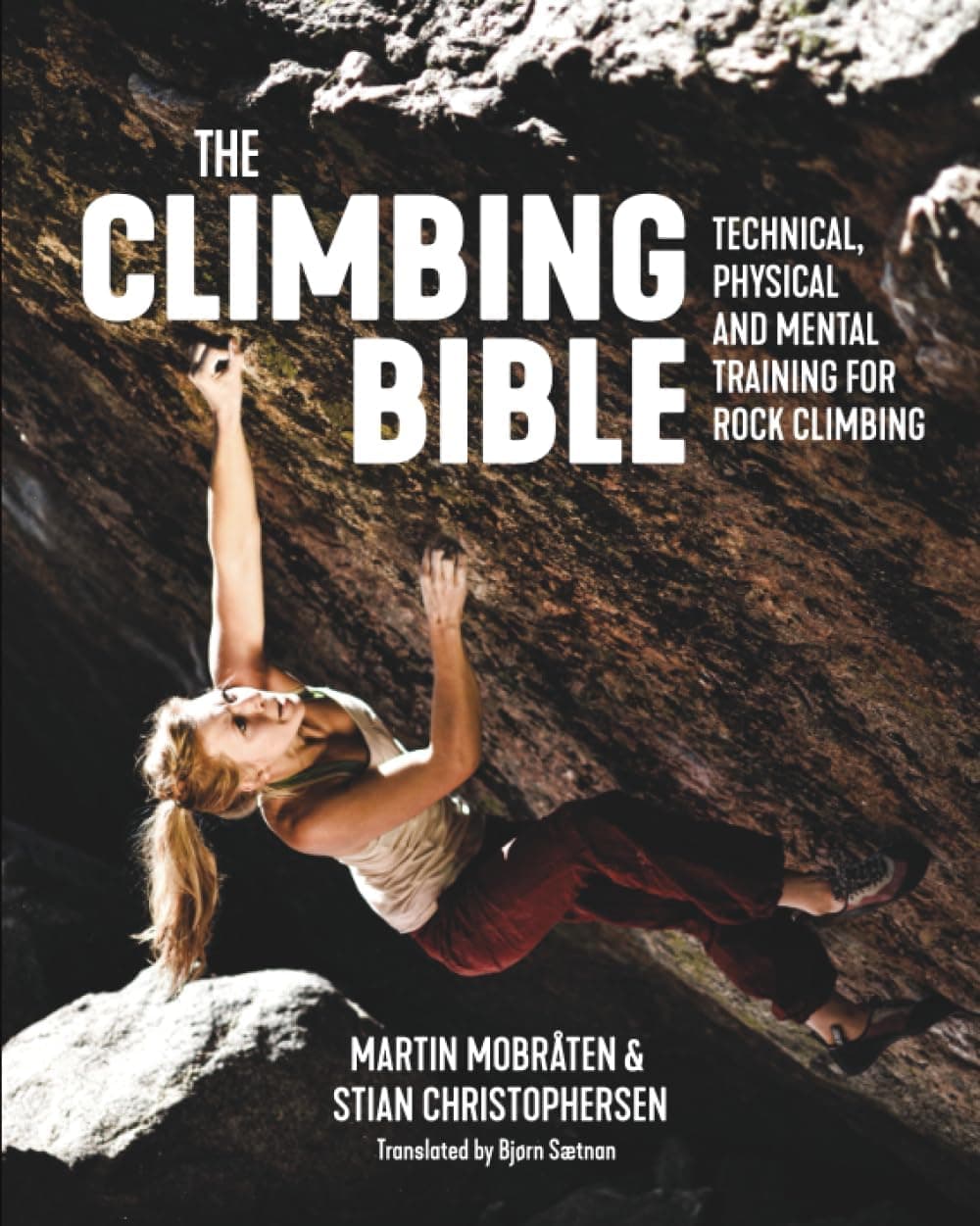
The Climbing Bible by Martin Mobraten and Stian Christophersen, covering technical, physical and mental training.
Price range: See on Amazon
What we liked
- + Balances technique, physical training and mindset in one book
- + Clear visuals help readers learn movement concepts
- + Widely recommended for climbers moving past beginner level
Trade-offs
- - Large book is not a quick reference at the crag
- - Covers many topics, so advanced athletes may want deeper specifics
Who Should Read The Climbing Bible
The Climbing Bible, written by Martin Mobraten and Stian Christophersen and translated by Bjorn Saetnan, is aimed at climbers who have moved past absolute beginner status and want a structured way to improve technique, physical conditioning and mental approach together rather than working on one area at a time. The publisher's own listing describes the book as covering technique, physical training, mental training, tactics, general training and injury prevention, and training plans, which suits a climber who wants a broad curriculum rather than a narrow how-to on one skill. It is less useful as a quick reference to flip through at the crag between routes, since it reads as a structured training text with roughly 400 photos illustrating movement and exercises rather than a condensed cheat sheet, so climbers wanting a pocket reference should look elsewhere.
What the Book Actually Covers
The book is organized around six sections spanning technical movement, physical training, mental training, tactics, general training and injury prevention, and sample training plans, according to the publisher's description. Vertebrate Publishing, which handles the book in English, includes a foreword by author Jo Nesbo and interviews with climbers throughout the chapters, which breaks up the instructional content with first-person perspective. The roughly 400 photographs illustrate technique points and physical exercises side by side, a format meant to make movement concepts easier to picture than text description alone. Because the authors treat mental training and tactics as full sections alongside physical and technical work, the book positions itself as a complete training system rather than a single-topic guide to only strength or only footwork.
Using the Book as a Training Plan
Climbers get the most from a book like this by working through it section by section rather than reading straight through once, since the technical and physical chapters build toward the sample training plans near the end. Because it functions as a training guide rather than a safety manual, climbers should still follow official instruction and their gym or crag's own safety guidance for any technique involving fall protection, belaying or protection placement, and should not treat any single book as a substitute for in-person coaching from a qualified instructor. As a paperback with hundreds of photos, the book holds up fine to normal home and gym-bag use, though its size makes it better suited to being read at home or between sessions than carried to the crag as a working reference during a climb.
How It Compares to Other Training Books
The Rock Climber's Training Manual by Michael and Mark Anderson takes a more data-driven, periodized approach focused heavily on physical training cycles, which suits climbers who want structured workout plans more than the broader technique-and-mindset coverage this book offers. Eric Horst's Training for Climbing covers similar ground to The Climbing Bible across technique and physical preparation but is written from a different training philosophy, so climbers sometimes read both for contrasting perspectives. Beastmaking by Ned Feehally narrows in specifically on finger strength and hangboard training, a level of depth this broader book does not attempt to match on that one topic. The authors also publish The Climbing Bible: Practical Exercises as a companion volume with more exercise detail, which pairs naturally with this original text for climbers who want a workbook alongside the main book.
Verdict and Who Might Want a Different Book
The Climbing Bible suits a climber past the beginner stage who wants one structured resource covering technique, physical training and mental approach together, with clear photos to help translate movement instructions into practice. Climbers looking for a narrow, deep dive into one area, such as finger strength or a rigid periodized workout calendar, are better served by a specialist title like Beastmaking or The Rock Climber's Training Manual. Anyone wanting exercise detail to pair with this book's instruction can add the companion Practical Exercises volume from the same authors, while climbers who just want a quick crag-side reference should look at something shorter and more condensed than this comprehensive training text.
Frequently asked questions
Who wrote The Climbing Bible?
Martin Mobraten and Stian Christophersen wrote the book, with Bjorn Saetnan credited as translator for the English edition.
Is this book good for absolute beginners?
It works best for climbers who already have basic movement and safety skills and want to build technique, physical training and mental approach further, rather than as a first introduction to the sport.
Does the book include training plans?
Yes, it includes sample training plans as one of its main sections, built on the technical and physical training chapters that come before it.
Is there a companion book with more exercises?
Yes, the same authors publish The Climbing Bible: Practical Exercises, which pairs with this book for climbers who want additional exercise detail.
Prices change often, so check the current price and availability on Amazon.
Check price on AmazonClimbing Nest may earn a commission from the link above.