The Climbing Bible: Practical Exercises - Technique and Strength Training for Climbing Review (2026)
Updated September 20, 2026 · Research-based review
Our verdict
The Climbing Bible: Practical Exercises by Martin Mobraten and Stian Christophersen is a 192 page companion volume built around drills for technique and strength, illustrated with over 200 photos. It rewards climbers who want session-ready exercises, though it leans on the original Climbing Bible for deeper background.
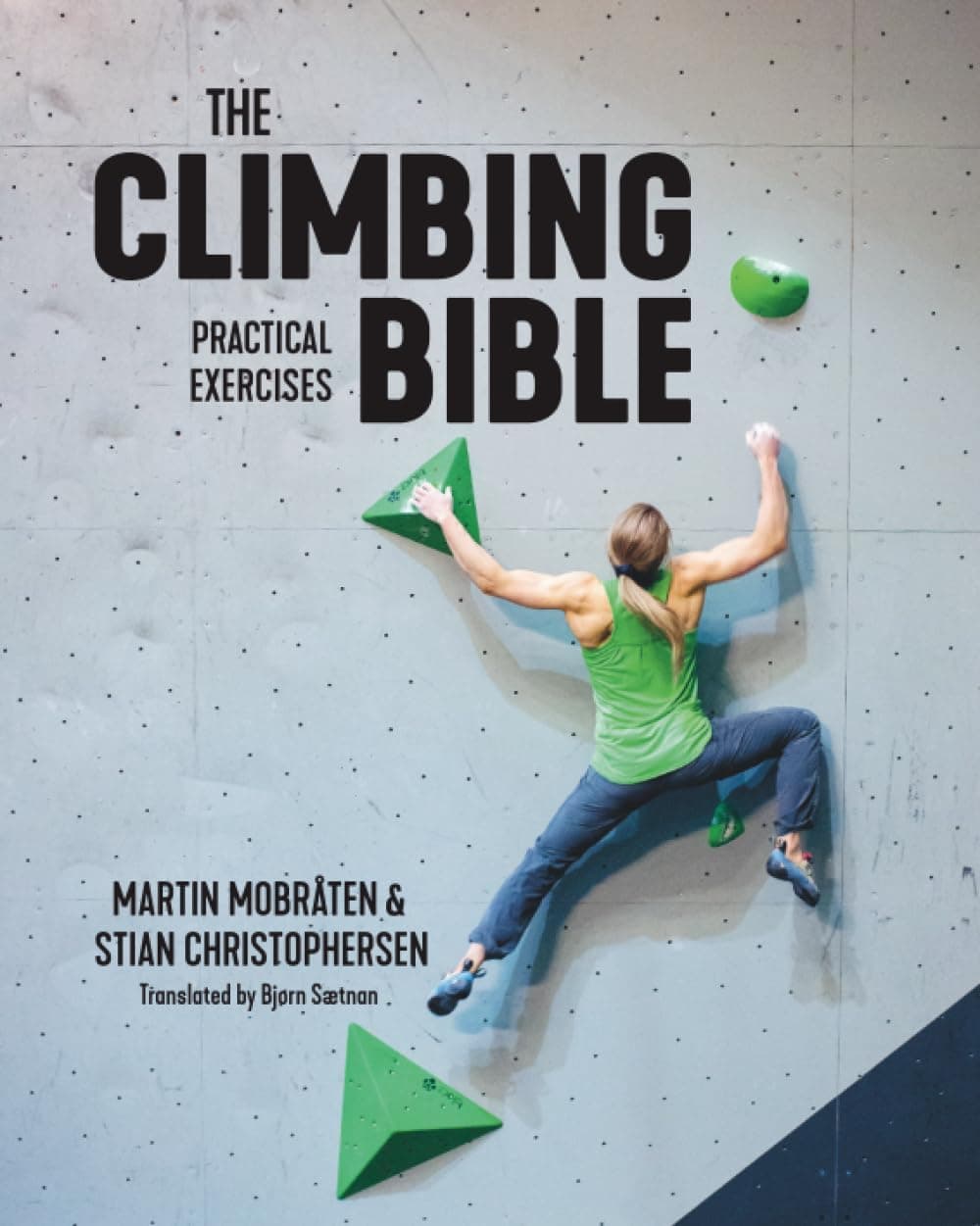
The Climbing Bible: Practical Exercises, a companion book of technique and strength drills for climbers.
Price range: See on Amazon
What we liked
- + Practical exercise format turns theory into session plans
- + Technique drills help climbers who plateau on movement
- + Complements the original Climbing Bible well
Trade-offs
- - Works best alongside the first book for context
- - Exercise-heavy content offers less background explanation
What this book covers
The Climbing Bible: Practical Exercises, written by Martin Mobraten and Stian Christophersen and published by Vertebrate Publishing as a 192 page paperback, is organized into three sections: technique, strength and power, and a dedicated chapter for children and youth climbers. The technique section covers footwork, grip positions, balance and direction of force, while the strength and power section moves through on-the-wall exercises, finger strength and fingerboarding, and arm training. Christophersen is a physiotherapist and coach who competed on the Norwegian national team and won the 2009 national bouldering title, and has coached several of Norway's top competitive climbers since retiring from competition.
Exercise-first format
Unlike a book that spends most of its pages explaining theory, this one is built around practical drills illustrated with more than 200 technique and action photos, so a reader can open to a section and start a session rather than reading through a long setup first before climbing. That format makes it a natural training companion rather than a cover to cover read, since climbers can dip into whichever section matches the weakness they are working on that day at the gym or crag. The trade-off is that background explanation for why each drill works gets less space than in a more theory-heavy title aimed at deeper study of the underlying mechanics.
Relationship to the original Climbing Bible
This book is explicitly a companion to the authors' earlier title, The Climbing Bible, which covers technical, physical and mental training in more depth, though reviewers note it can be read on its own without that background material. Readers who already own the first book will get the most value here, since the practical exercises slot into the framework the original book lays out chapter by chapter across the season. Someone starting from zero with no background in the authors' approach can still use the drills directly, but may miss some of the reasoning and context that the first book supplies along the way through its chapters.
Coverage for kids and coaches
A dedicated chapter for children and youth climbers sets this book apart from most adult-focused training guides, offering games, technique exercises and physical training ideas aimed at parents and coaches working with younger climbers at a gym or club. That section is a practical bonus for climbing coaches or parents who also climb themselves, since it saves hunting for youth-specific material elsewhere online or in other books written for adults. For climbers without kids or coaching responsibilities, the adult technique and strength sections remain the main draw, with the youth chapter as an added extra rather than the core reason to buy.
Who should buy this book
This book suits climbers who plateau on movement or technique and want structured drills rather than another explanation of climbing theory, plus coaches working with young climbers who value the dedicated youth chapter and its ready-made session ideas. It pairs naturally with the original Climbing Bible for readers who want both the reasoning and the exercises in one library on the shelf. Given the site's own score reflecting solid but not top-tier standing against other training titles in this guide, it works best as a practical add-on to a more foundational training book rather than a first and only purchase.
Frequently asked questions
Who wrote The Climbing Bible: Practical Exercises?
Martin Mobraten and Stian Christophersen, published by Vertebrate Publishing as a 192 page paperback.
Do I need to own the original Climbing Bible first?
It can be read independently, but it works best as a companion to the original Climbing Bible, which covers more of the underlying theory.
Does this book cover training for kids?
Yes, a dedicated chapter offers games, technique exercises and physical training ideas for parents and coaches working with young climbers.
How many photos are in the book?
Over 200 technique and action photos illustrate the exercises throughout.
Prices change often, so check the current price and availability on Amazon.
Check price on AmazonClimbing Nest may earn a commission from the link above.