An Introduction to Trad Climbing Concepts
As an Amazon Associate I earn from qualifying purchases.
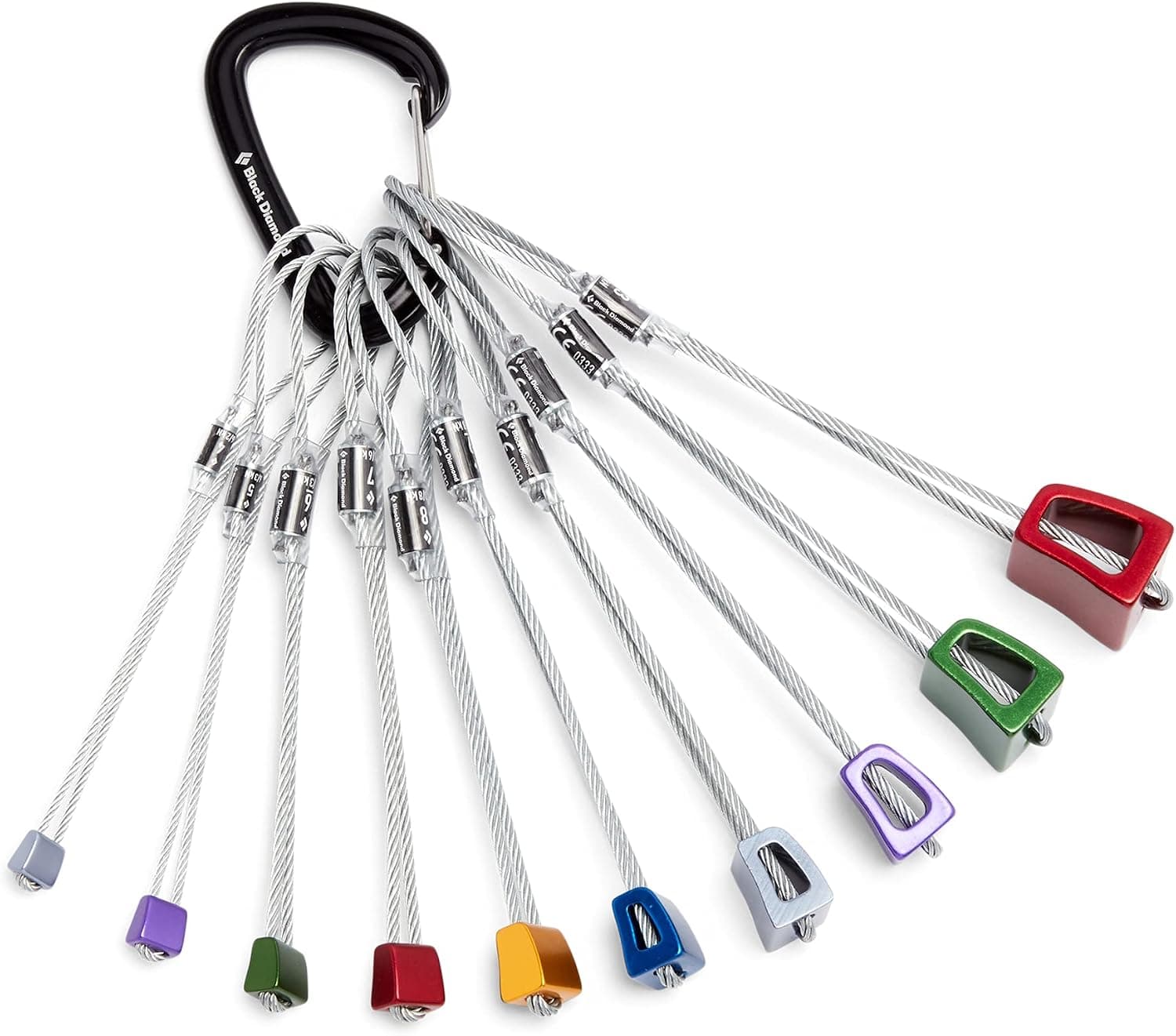
Traditional climbing, universally shortened to trad, is the branch of the sport where the leader places removable protection in the rock while climbing, rather than clipping pre-placed bolts. Cracks, constrictions, and natural features become anchor points through clever pieces of gear, and the second climber removes everything on the way up, leaving the rock as it was found. Trad is where climbing's adventure lives for many people, and it carries a correspondingly greater demand for judgment, skill, and humility.
The gear itself divides into two families. Passive protection has no moving parts: nuts, also called stoppers, are tapered metal wedges slotted into constrictions in cracks, and hexes and similar shapes work on the same principle in larger sizes. Active protection has moving parts, and the dominant example is the camming device, whose spring-loaded lobes expand against parallel crack walls and convert a downward pull into outward pressure. A trad rack combines a range of nut sizes and cams with slings, carabiners, and the quickdraw-style connections needed to link protection to the rope while managing rope drag.
What makes trad fundamentally different from sport is that protection quality becomes your responsibility. A well-placed piece in good rock can be extremely strong; a poorly placed piece, or a good placement in bad rock, may hold nothing at all. Learning to evaluate rock quality, choose the right piece, seat it properly, and extend it so the rope's movement does not walk it out of position is the core craft of trad leading. Alongside placement skills sit anchor building, where multiple pieces are combined into a system with redundancy and good load distribution, and rope management for multi-pitch climbing, where trad frequently leads.
The mental game changes as well. Sport climbing encourages climbing to your physical limit because falls on bolts are routine. Trad leaders typically climb with a wider margin, choosing routes well below their physical maximum, because falling on gear carries more variables and because a leader gripped by fear places worse protection. Route finding, retreat planning, weather awareness, and the discipline to back off are all part of the skill set. Good trad climbers are defined less by the grades they lead than by the quality of their decisions.
The path into trad should be gradual and mentored. A sensible progression looks like this: become a competent sport leader first, then second experienced trad climbers, cleaning their gear and studying every placement as you remove it. Practice placements on the ground and build anchors under supervision. Take a course from a certified guide or club instructor, since professional feedback on placements is worth years of unsupervised guessing. When you begin leading, choose routes far below your sport limit, on popular climbs with well-documented protection, and build up slowly.
What you get in return for all this care is a kind of climbing that feels complete: you solve the rock's puzzle physically and mentally, protect yourself with your own judgment, and leave no trace of your passage. Trad opens up mountains, sea cliffs, and backcountry walls that bolts will never reach. There is no rush to get there, and the journey through sport climbing and seconding is genuinely enjoyable in its own right, but for many climbers trad is the destination that makes the whole sport make sense.