Climbing Harness Size and Fit: How to Measure, Adjust and Check
Published How we research
A climbing harness is the one piece of gear that holds your whole body weight in a fall, and it only works as intended when it fits. Too loose, and it can ride up or shift. Too tight, and it can pinch and cut off circulation during long hangs. Sizing depends on your waist, your legs and what you plan to wear underneath. This article covers how to measure, how a correct fit looks and the checks to repeat before every climb.
Products from this article
The highest-scoring picks from the buying guides this article links to. Scores are our editorial assessment, not customer ratings.
As an Amazon Associate we earn from qualifying purchases. This does not change our picks. Affiliate disclosure
New to Prime? Try Prime free for fast, free shipping on eligible items.
+ Adjustable leg loops fit over bulky layers or bare legs equally well
From our guide: Best Climbing Harnesses
+ Contoured waistbelt and leg loops fit a female shape more naturally
From our guide: Best Women's Climbing Harnesses
+ Full body design keeps small kids upright and secure if they tip back
From our guide: Best Kids Climbing Harnesses
+ Lighter build than the standard Corax for climbers who count grams
From our guide: Best Climbing Harnesses
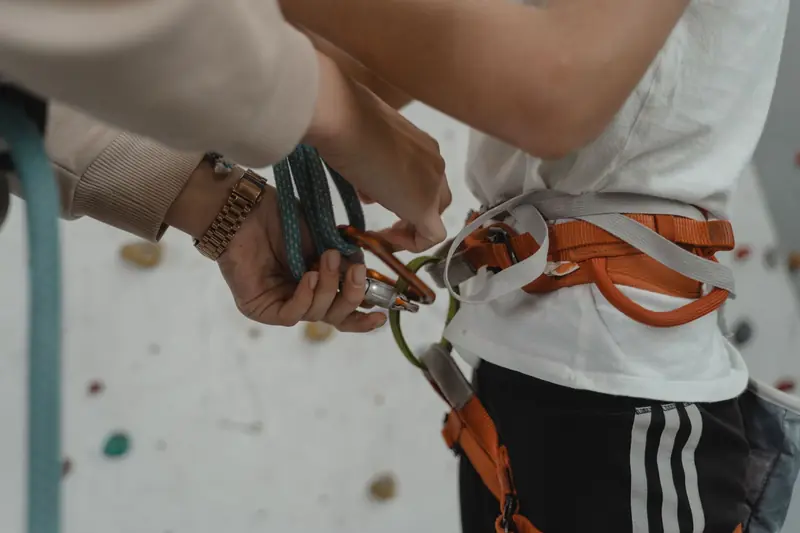
Where the harness should sit
The waist belt belongs above your hip bones, not on your waist or lower down on your hips. If it is too low, it can slip over your hips when you fall or hang upside down. The belt should feel snug, with room to fit a flat hand between the harness and your body, but not much more.
Leg loops sit around the upper thighs, close but not tight. When you stand, the leg loops should hold their shape without sagging. Your clothing matters, so try the harness on while wearing the pants you will climb in.
A useful test is to tighten the harness, then hang from the rope for a moment at low height with a partner holding you. You should feel supported across the waist and legs without sharp pressure, and the belt should stay in place.
Measuring yourself
Brands give size charts based on waist and sometimes thigh circumference, so start with a soft tape measure. Measure around the narrowest part of your waist, where the belt will sit, and around the widest part of each thigh. Compare these numbers with the chart for the exact model.
Sizes differ between brands, and a medium in one line may not match a medium in another. If you fall between two sizes, many fitters recommend trying both and picking the one where the buckles land in the middle of their adjustment range.
Write down your measurements and keep them, since they make it simple to compare brands later. If you are shopping for a child, use the manufacturer's height and weight ranges alongside the measurements, and check the harness again as they grow.
Adjusting the buckles
Modern harnesses use buckles on the waist and, for adjustable styles, on the legs. Follow the brand's instructions for the buckle type, since some require you to double back the webbing and others use self locking systems. A half done buckle is a safety problem, so check them every time you put the harness on.
After tightening, make sure that the tail of the webbing sticks out far enough, and that the buckle sits in the middle of its adjustment range. If you are at the very end of the straps, the harness may be the wrong size.
Fixed and adjustable leg loops
Adjustable leg loops let you change the fit for layers, such as winter pants, and they suit a wide range of body shapes. Fixed loops are often lighter and simpler, which some sport climbers like, but they cannot be changed if your clothes vary.
Women's and kids' models are built with different proportions, including shorter rises and smaller leg openings. Try them if standard sizes do not sit right. Children grow fast, so check their harness often and use the size chart for kids' models.
Signs the fit is wrong
Warning signs include a waist belt that slides down when you pull it, leg loops that gap at the sides, numbness while hanging, and buckles that sit at the end of their range. The belay loop and tie in points should sit at the front without twisting.
If you can pull the harness over your hips or if you feel sharp pressure when you sit back, adjust it. If the harness still does not fit well, consult a climbing shop or instructor, who can check it while you wear it.
Check before every climb
Each time you put the harness on, check that buckles are doubled back or locked as instructed, that the waist belt is snug and that no straps are twisted. Ask your partner to look it over as well, since a second pair of eyes is a normal part of climbing routines.
Look at the webbing for wear, such as fraying, cuts and stiff spots, and check the tie in points and belay loop. Follow the manufacturer's guidance on when to retire a harness. If something looks damaged, do not climb in it.
Trying on before you buy
If possible, try a harness in a shop and hang in it for a minute, since a harness that feels fine standing up can pinch when you sit in it. Many shops have a rope or bar for this purpose. Wear your usual clothes and tighten the buckles as you would climb.
When buying online, read the size chart and the return policy before you order. Check that the harness is meant for your type of climbing, such as gym, sport, trad or big wall, because features like gear loops and padding vary.
Special cases and changing bodies
Weight changes, pregnancy and growth can all change how a harness fits, and some people need a different style. Pregnancy and maternity harnesses exist, but anyone who is expecting should talk to a doctor before climbing. Children's bodies change quickly, so recheck their size often.
Winter layers can alter the fit too. If you climb in bulky clothing, you may need to loosen the leg loops, and in summer you may need to tighten them again. Adjustable models make that easier, which is why many all around climbers prefer them.
Popular right now
- The Best Climbing Nuts and StoppersBuying guide
- Best Belay DevicesBuying guide
- Best Headlamps for ClimbersBuying guide
- Bouldering vs Rope ClimbingArticle
- Climbing Photography BasicsArticle
- The Best Climbing SalvesBuying guide
Based on the last 28 days of search and visitor data.