Petzl Sirocco Ultra-Lightweight Climbing Helmet - White M/L Review (2026)
Updated September 20, 2026 · Research-based review
Our verdict
One of the lightest climbing helmets available, built from foam rather than a hardshell, so it disappears on long alpine days where every gram counts. The white M/L version stays visible and cool in the sun, but it needs more careful packing than a hardshell like the Half Dome, and the price is high for occasional climbers.
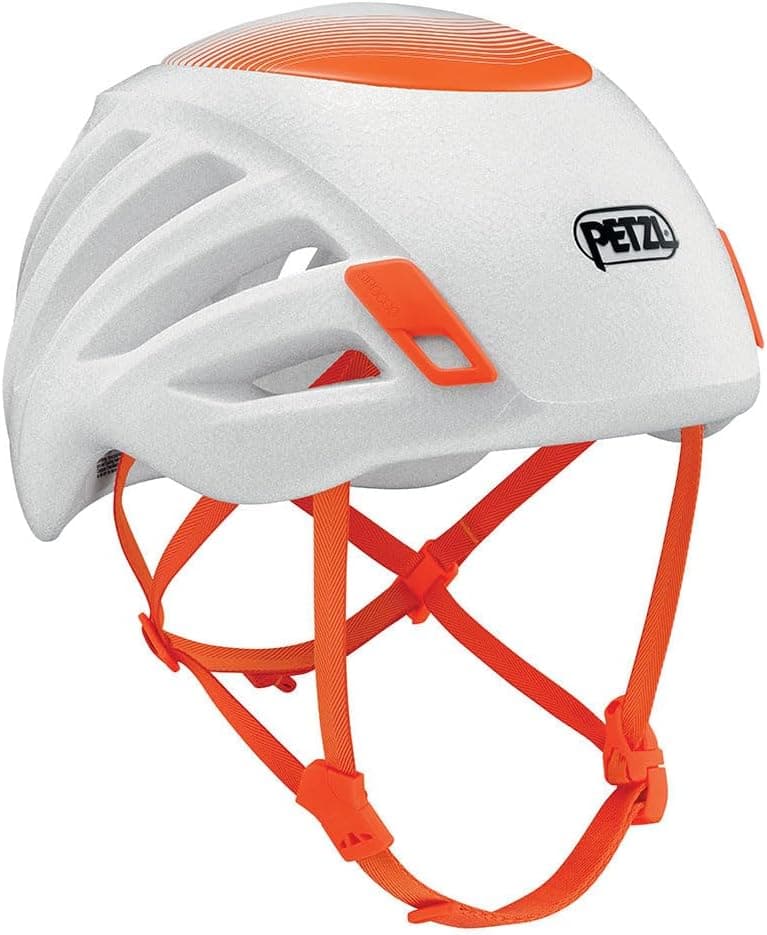
Petzl's Sirocco in white M/L, an ultra-lightweight foam helmet for alpine climbs and long objectives where grams matter.
Price range: See on Amazon
What we liked
- + Ultra-lightweight build is barely noticeable on long alpine routes
- + White color reflects heat and stays visible to partners
- + M/L size suits climbers with medium to larger heads
Trade-offs
- - Foam shell needs careful packing because it can dent easily
- - Premium price is high for gym or occasional crag climbers
Weight and construction
The Sirocco is built around expanded polypropylene foam that rebounds after minor impacts, paired with an expanded polystyrene foam section over the crown for added protection at the point most likely to take a direct hit. Petzl lists the M/L size at 170 grams, among the lightest weights of any commercially available climbing helmet, with the S/M size coming in slightly lighter at 160 grams. The shell itself is polycarbonate, and the webbing is polyester, a combination chosen to shave weight everywhere possible without dropping below CE EN 12492 and UIAA certification standards. This construction is a deliberate tradeoff: the foam absorbs impact differently than a hardshell, prioritizing minimal weight for climbers who feel every extra gram on a long approach or technical route.
Fit and sizing
This listing is the M/L size, covering roughly 53 to 61 centimeters of head circumference, sized up from the S/M option that covers about 48 to 58 centimeters. Petzl uses a minimalist buckle system with adjustable webbing rather than a dial, keeping the whole helmet lighter but meaning fit adjustments are made by hand rather than with a quick turn. The reduced front brim is designed to stay out of the field of view when looking up at gear or a belayer, which matters on techy terrain where visibility counts. Two front clips and a rear elastic band hold a headlamp in place for early starts, a detail unchanged from earlier Sirocco generations.
Ventilation and visibility
Integrated air channels run through the foam shell to keep air moving on warm approaches, a benefit that hardshell helmets like the Half Dome or Boreo cannot match as easily since their solid ABS shells trap more heat. The white colorway reflects sunlight rather than absorbing it, which helps on long summer approaches in direct sun, and light colors also tend to stand out clearly to climbing partners on a rock face or in photos, which some climbers value for visibility on multi-pitch routes. Petzl also offers the Sirocco in black for climbers who prefer a low-key look, but the core protection and weight are the same across colors.
Durability tradeoffs
The foam construction that makes the Sirocco so light also makes it less forgiving of rough handling than a hardshell helmet. Tossing it loose into the bottom of a pack with hardware, cams or a rope can dent the foam over time in ways that a Half Dome or Boreo would shrug off. Petzl backs the Sirocco with a three-year warranty, and many climbers who own one keep it in a dedicated stuff sack or the top of a pack rather than mixing it in with sharp gear. This is less of an issue for climbers who mainly wear the helmet rather than pack it away, but it is worth factoring in for anyone planning long approaches with a full rack.
Who should buy the Sirocco
The Sirocco suits alpine climbers, ice climbers and anyone doing long multi-pitch days where the weight difference between a foam helmet and a hardshell adds up over hours of wear. It is a premium option, priced well above hardshell helmets like the Half Dome or Boreo, so it makes the most sense for climbers who already climb enough to feel the benefit of the lower weight. Beginners, gym climbers or anyone who wants one rugged helmet that survives careless packing will likely get better value and durability from a hardshell design instead, saving the Sirocco for when minimal weight actually changes the day.
Frequently asked questions
How much does the Petzl Sirocco weigh?
Petzl lists the S/M size at 160 grams and the M/L size at 170 grams, among the lightest climbing helmets available.
What is the Sirocco made from?
It uses a polycarbonate shell over expanded polypropylene and expanded polystyrene foam, rather than the hardshell construction used on helmets like the Half Dome.
What size range does the M/L Sirocco fit?
The M/L size fits roughly 53 to 61 centimeters of head circumference.
Does the foam shell need special care?
Yes, the foam can dent if packed loosely with hard gear, so many climbers store it in a dedicated pocket or stuff sack rather than tossing it in with a rack.
Prices change often, so check the current price and availability on Amazon.
Check price on AmazonClimbing Nest may earn a commission from the link above.