Metolius Personal Anchor System - 22 Black/Yellow Review (2026)
Updated September 14, 2026 · Research-based review
Our verdict
The Metolius PAS 22 in black and yellow is a daisy-style tether built with full-strength sewn loops, unlike older daisy chains where only certain loops could hold a fall. It is a well known standard for anchoring in and rappelling on multi-pitch routes, though the static webbing can shock load if you fall onto a slack tether.
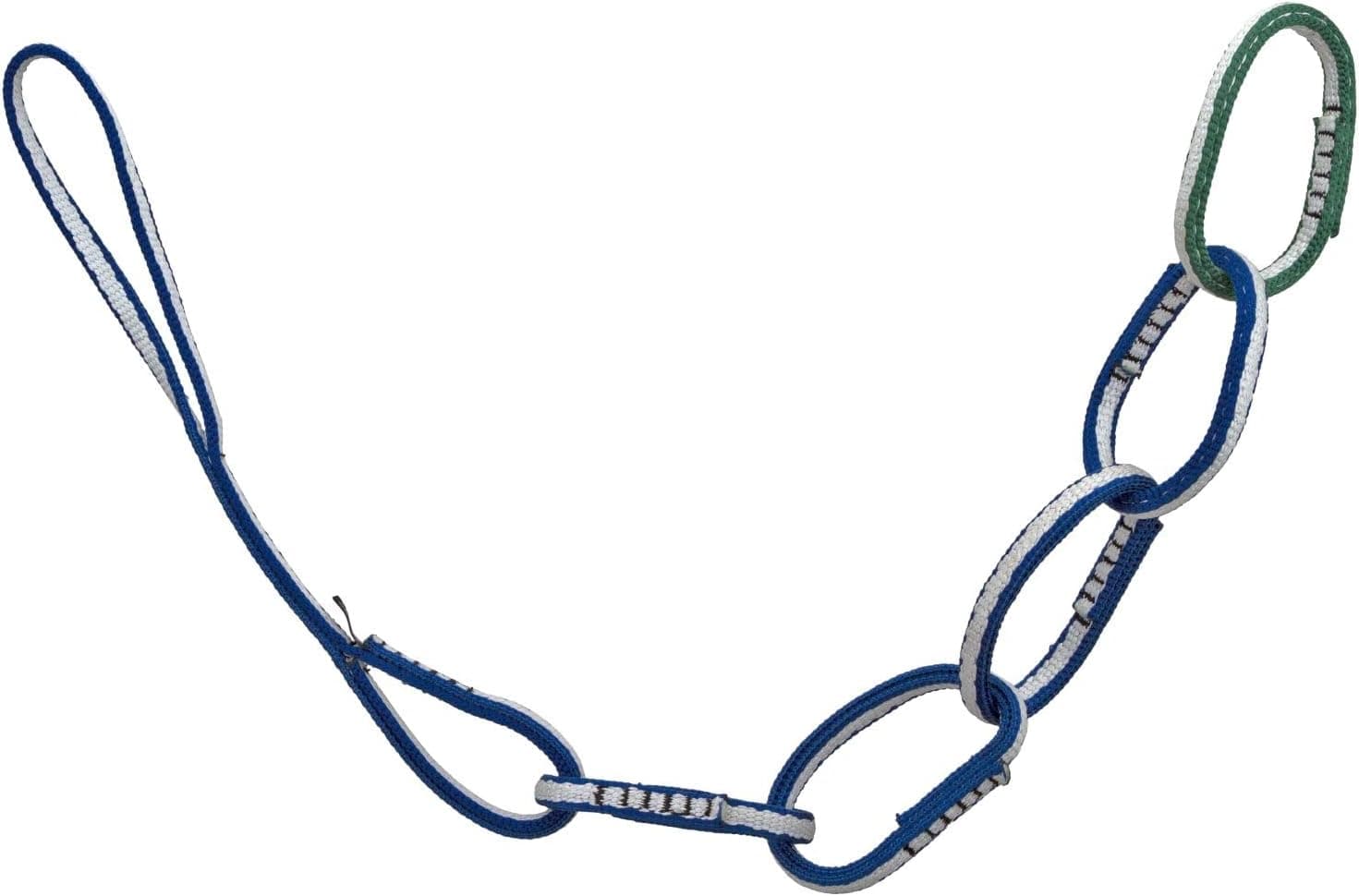
Metolius Personal Anchor System in black and yellow, a daisy-style tether with full-strength loops for anchors.
Price range: See on Amazon
What we liked
- + Every loop is full strength, unlike traditional daisy chains
- + Multiple loops let you adjust your distance from the anchor
- + Metolius PAS is a well-known standard for multi-pitch and rappelling
Trade-offs
- - Static nylon can shock load if you fall onto a slack tether
- - Loops add clutter to the harness when not in use
Who this tether fits
The Metolius PAS 22 is built for climbers who need a reliable way to clip directly into a multi-pitch or trad anchor, rappel station, or via ferrata point, rather than tying in with rope alone every time. Its chain-link-style construction of sewn loops solves a real problem with older-style daisy chains, where certain loops were not rated to hold a real fall and climbers had to be careful which loop they clipped. Every loop on the PAS 22 is full strength, which removes that guesswork and makes it a safer default choice for anchoring in at a hanging belay. Climbers who only ever anchor in using the rope itself, rather than a dedicated tether, may not need this product, but anyone doing regular multi-pitch or trad routes with hanging stances will find it a standard piece of the rack.
Construction, strength and length explained
Metolius builds the PAS 22 from double-wrapped 11mm Monster webbing, with each individual loop rated to 22 kN, which is roughly 5,000 pounds of static strength per loop according to retailer specifications. Each loop measures about 5 inches, and the full PAS measures roughly 36 inches before you girth-hitch it to your harness tie-in points, giving you a range of clip-in distances by choosing which loop to use. The chain-link design means you girth hitch the tether to your harness once and then clip into an anchor using any full-strength loop along its length, adjusting your distance from the anchor without needing to retie anything. This is a meaningful upgrade over the older-style Metolius PAS, which used a single continuous run of 16mm webbing with bar-tacked loops rated to a lower 18 kN.
Using it day to day on multi-pitch routes
In practice, the PAS 22 makes transitioning at a hanging belay straightforward, since you can quickly choose a shorter or longer loop to clip into the anchor depending on how far you need to stand or sit from the bolts or gear. Because it is static nylon webbing rather than dynamic rope or a specialized energy-absorbing lanyard, it does not stretch to absorb a fall the way a dynamic rope does, so climbers need to keep it snug rather than clipping in with slack that could let them fall and shock load the tether and anchor. The multiple loops do add some bulk and clutter to a harness gear loop or belay loop when not fully deployed, which some climbers manage by clipping the unused loops together or tucking them out of the way while climbing between anchors.
How it stacks up against other anchor tethers
Against the Metolius Dynamic PAS, which uses loops made from a dynamic rope-like material instead of static webbing, the standard PAS 22 is lighter and less bulky but does not absorb energy the way the dynamic version does if you were to fall directly onto it, making the dynamic version the safer choice for climbers worried about shock loading. Against the Petzl Connect Adjust and Dual Connect Adjust lanyards, which use an adjustable single strand rather than multiple fixed loops, the PAS 22's chain-link design offers more discrete clip-in points but less fine-tuned length adjustment than a sliding adjustable lanyard. Against the Sterling Rope Chain Reactor, a similar chain-style tether, the choice largely comes down to brand preference and length, since both follow the same full-strength loop concept.
Bottom line
The PAS 22 is a solid, well established choice for climbers who need a dependable tether for anchoring in at hanging belays and rappel stations, with every loop rated to a genuine 22 kN full-strength rating that removes the guesswork of older daisy chain designs. It earns our score of 8.6 out of 10, with value rated highest since it delivers a trusted safety standard at a reasonable price. Climbers who want extra fall protection from shock loading should consider the Metolius Dynamic PAS instead, and everyone using a PAS or similar tether should keep it snug rather than clipping in with slack, following standard anchor safety practice and the manufacturer's instructions.
Frequently asked questions
What is the strength rating of each loop on the Metolius PAS 22?
Each loop is rated to 22 kN, roughly 5,000 pounds of static strength, according to retailer specifications.
How long is the Metolius PAS 22?
The full tether measures roughly 36 inches before girth-hitching it to your harness, with individual loops of about 5 inches each.
Can the PAS 22 absorb a fall like a dynamic rope?
No, it is made from static webbing, so it does not stretch to absorb energy. Clip in snug rather than with slack to avoid shock loading, following the manufacturer's safety guidance.
How is the PAS 22 different from the original Metolius PAS?
The PAS 22 uses double-wrapped 11mm webbing with loops rated to 22 kN, an upgrade over the older single-strand 16mm design rated to 18 kN.
Prices change often, so check the current price and availability on Amazon.
Check price on AmazonClimbing Nest may earn a commission from the link above.