Petzl Connect Adjust Lanyard Blue, Adjustable Single Lanyard for Climbing Review (2026)
Updated September 14, 2026 · Research-based review
Our verdict
An adjustable dynamic rope lanyard for climbers who need to dial in exact anchor distance during multi pitch belays, rope work and route cleaning. The built in adjuster and dynamic rope construction add real convenience and some fall energy absorption, at the cost of extra weight and price over a simple loop tether.
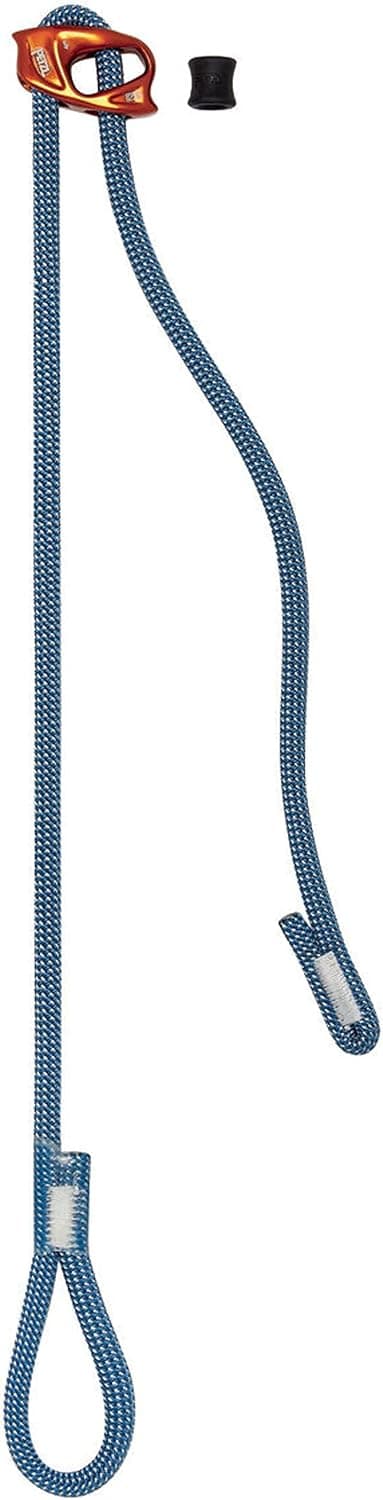
Petzl's Connect Adjust single lanyard in blue, a dynamic rope tether with an adjuster for fine-tuning anchor distance.
Price range: See on Amazon
What we liked
- + Adjustable length lets you position yourself precisely at the anchor
- + Dynamic rope construction absorbs more energy than static slings
- + Useful for multi-pitch, rope work and cleaning sport routes
Trade-offs
- - Adjuster adds weight and cost compared with simple loop tethers
- - Single arm limits use when you need two points of attachment
What the Connect Adjust does
The Connect Adjust is a single arm lanyard from Petzl built around a 9 millimeter dynamic climbing rope rather than static webbing, paired with an ergonomic rope adjuster called ADJUST at one end. According to Petzl's own product page, the lanyard adjusts smoothly from about 15 to 95 centimeters, letting a climber shorten it for working close to an anchor or lengthen it to reach a farther bolt or piece of gear. It weighs around 125 grams, and the blue colorway reviewed here is the single arm version, as opposed to Petzl's Dual Connect Adjust which adds a second arm for redundancy. It is certified to CE and UIAA 109 standards for personal anchor lanyards used in climbing and rope access.
Why dynamic rope and an adjuster matter
Because the lanyard core is a real dynamic climbing rope rather than static webbing or a static rope tether, it absorbs more energy in the event of a short fall onto it than a nylon webbing chain style tether would, which is part of why Petzl markets it for cleaning routes and multi pitch transitions where a climber may briefly load the tether. The ADJUST hardware lets a climber change the working length with one hand while staying clipped in, sliding the rope through the adjuster rather than unclipping and reclipping into a different loop the way a chain tether requires. That adjustability is the main functional difference from fixed length webbing tethers like Sterling's Chain Reactor or Metolius's Personal Anchor System, and it is the reason climbers who move between many different anchor distances in a day often prefer this style of lanyard.
Using it on route
On multi pitch routes and when cleaning sport anchors, climbers clip the lanyard's aluminum end connector to their belay loop and use the free end to tether into bolts, chains or gear anchors, adjusting length on the fly as they build or break down a station. The thermoplastic elastomer sleeve around the adjuster is designed to make the mechanism easy to grip and operate even with gloves on, and the dynamic rope construction coils and packs more like a mini climbing rope than flat webbing. Owners commonly reach for this style of lanyard specifically for the adjustability during route cleaning, where the exact distance to the next bolt or anchor point changes constantly and a fixed length tether would require frequent reclipping.
Trade-offs against simpler tethers
The adjuster hardware and dynamic rope core add weight and cost compared with a basic sewn webbing loop tether such as the Chain Reactor or a Metolius PAS, and being a single arm design it does not offer the redundancy of Petzl's own Dual Connect Adjust, which uses two separate arms so a climber always has a backup connection point. For climbers who mainly need a simple, cheap way to clip into an anchor at one fixed distance, a static loop tether covers that need with less bulk on the harness. The adjustability really pays off for climbers doing a lot of multi pitch work, rope access style transitions, or route cleaning where anchor distances vary pitch to pitch.
Who it fits
This lanyard suits multi pitch climbers, route setters and climbers who clean sport routes and want one hand adjustability rather than a fixed chain of loops. It is a reasonable upgrade for climbers who already own a basic webbing tether and want the extra convenience and shock absorbing benefit of a dynamic rope core for anchor transitions. Climbers who need two independent attachment points for redundancy at hanging belays should look at the Dual Connect Adjust instead, and those on a tight budget or who rarely change anchor distance may find a simple sewn loop tether like the Chain Reactor or Metolius PAS does the job for less money and weight. Always follow Petzl's instructions for use and inspection before relying on any lanyard at height.
Frequently asked questions
How long does the Connect Adjust extend?
Petzl lists an adjustable range of roughly 15 to 95 centimeters, so it can be set short for tight anchor positioning or extended to reach farther gear.
Is this the single arm or double arm version?
This blue Connect Adjust is the single arm lanyard. Petzl also sells a Dual Connect Adjust with two arms for redundancy at anchors.
Does the dynamic rope core mean it can catch a real fall?
It absorbs more energy than a static webbing tether because it uses a dynamic rope core, but it should still be used as a positioning lanyard following Petzl's instructions, not as primary fall protection.
How much does it weigh?
Around 125 grams according to Petzl's published specifications, more than a simple webbing loop tether because of the rope core and adjuster hardware.
Prices change often, so check the current price and availability on Amazon.
Check price on AmazonClimbing Nest may earn a commission from the link above.