Mammut Smart 2.0 Belay Package Review (2026)
Updated September 14, 2026 · Research-based review
Our verdict
The Mammut Smart 2.0 belay package pairs a passive assisted device with a matched carabiner, giving new sport climbers extra security without the weight or learning curve of a cam-based device. It is single-rope only and takes practice to lower smoothly, but its simple shape and included carabiner make setup straightforward.
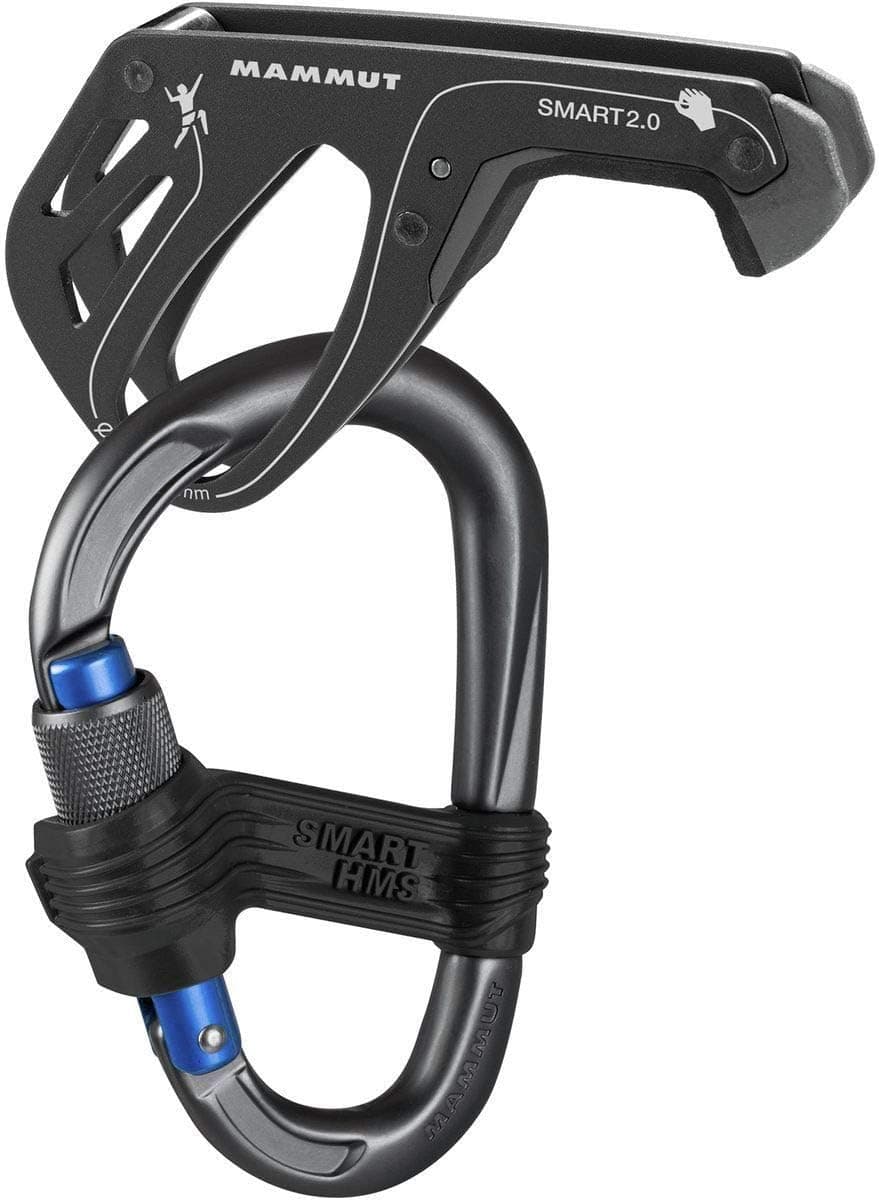
Mammut's Smart 2.0 belay package, a device and carabiner combo with assisted braking in a tube-style shape.
Price range: See on Amazon
What we liked
- + Package includes a matched carabiner so setup is correct from the start
- + Assisted braking gives extra security without the weight of a GRIGRI
- + Simple shape is easy to learn for new sport climbers
Trade-offs
- - Single rope only, so it cannot handle double rope rappels
- - Lowering smoothly takes practice compared with a cam device
Who this device fits
The Smart 2.0 is aimed at climbers who want assisted braking security without stepping up to the weight and mechanical complexity of a cam-based device such as a GRIGRI. Because it ships as a package with a matched carabiner, it is a sensible option for newer sport climbers buying their first assisted braking setup, since there is no guesswork about which carabiner shape pairs correctly with the device. Mammut builds it around a tube-style shape rather than a moving cam, so climbers who want a lighter device that still offers a real safety margin over a plain non-assisted tube plate are the best match. It is single-rope only, so climbers who need double-rope rappel capability for multi-pitch descents will need a different device for that part of the day.
Weight, rope range and build explained
Mammut lists the Smart 2.0 as compatible with rope diameters from 8.7mm to 10.5mm and states the device weighs just 80 grams, notably lighter than a cam-based assisted device like the GRIGRI at 175 grams. The device is described by Mammut as a passive assisted belay device, meaning there are no moving parts inside the Smart that cam or pinch the rope the way an active mechanism does. Instead, in the event of a fall the device blocks the rope through the interaction between a newly developed high-performance brake insert and the belay carabiner itself, which is why Mammut specifically recommends using the Smart HMS carabiner rather than a generic locking biner for full assisted performance. This carabiner-dependent design is the key engineering difference from cam-based devices.
Using it day to day at the gym and crag
Because the package includes the matched Smart HMS-style carabiner, setup is straightforward for climbers who are not yet confident picking compatible hardware on their own, and the simple tube shape is easy to learn compared with a cam mechanism. The tradeoff shows up when lowering a climber, since a passive assisted device generally requires more deliberate technique to release smoothly compared with a GRIGRI's ergonomic handle, and new users often report a slightly jerkier lowering motion until they get a feel for it. Being single rope only means this device cannot handle a double-rope rappel, so climbers doing multi-pitch routes that end in a rappel need to carry or switch to a tube device that accepts two ropes for that portion of the descent.
How it stacks up against other belay devices
Against the Petzl GRIGRI, the Smart 2.0 is lighter at 80 grams versus 175 grams and has no cam mechanism to load correctly, but it lacks the more positive, ergonomic lowering control that the GRIGRI's handle provides, and it depends more heavily on using the correct matched carabiner for full assisted performance. Against the EDELRID Mega Jul, another passive assisted device, the two occupy similar territory as lightweight alternatives to a cam-based device, with the choice often coming down to handling preference and included accessories, since the Smart 2.0 package bundles a carabiner while the Mega Jul is often sold on its own. Against a basic non-assisted tube device, the Smart 2.0 adds real fall-catching security for a modest weight penalty of a few dozen grams.
Bottom line
This package suits new sport climbers who want assisted braking security bundled with the correct carabiner in one purchase, without the weight or learning curve of a cam-based device. It earns our score of 8.6 out of 10, with value rated highest thanks to the included carabiner and reasonable weight for what the package delivers. Climbers who need double-rope rappel capability, or who want the most positive and forgiving lowering control available, should look at a versatile tube-style device or a cam-based device like a GRIGRI instead, since the Smart 2.0's passive mechanism trades some lowering smoothness for lighter weight and simpler mechanics.
Frequently asked questions
What rope diameters work with the Mammut Smart 2.0?
Mammut lists compatibility from 8.7mm to 10.5mm rope diameter.
How much does the Smart 2.0 weigh?
Mammut states the device weighs 80 grams, lighter than a cam-based assisted device such as the Petzl GRIGRI.
Can the Smart 2.0 be used for double-rope rappels?
No, it is a single-rope device, so a double-rope rappel requires a different tube-style device that accepts two ropes.
Why does the package include a specific carabiner?
Mammut recommends the Smart HMS carabiner because the device blocks the rope through interaction between its brake insert and the carabiner shape, so using the matched biner is important for full assisted performance.
Prices change often, so check the current price and availability on Amazon.
Check price on AmazonClimbing Nest may earn a commission from the link above.