DMM Pivot Belay Device - Lime Review (2026)
Updated September 14, 2026 · Research-based review
Our verdict
The DMM Pivot in lime is a guide-capable tube belay device whose pivoting connection hole makes releasing a loaded second much easier than a fixed-hole guide device. It suits multi-pitch and trad climbers who need guide mode, but sport climbers who mainly want an assisted braking catch should look at a cam-based device instead.
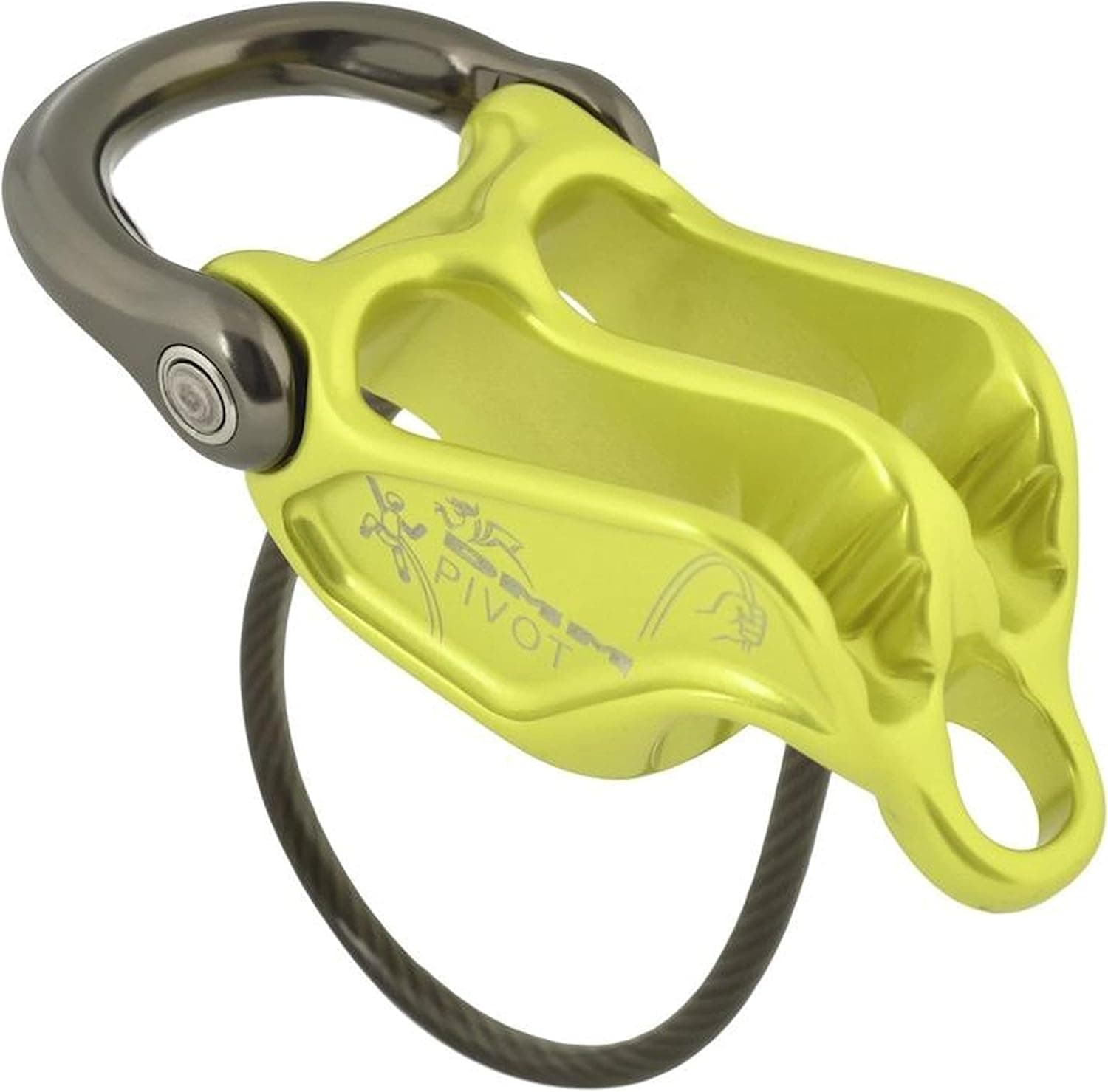
DMM's Pivot in lime, a guide-capable tube belay device with a pivoting eye that makes lowering a follower smoother.
Price range: See on Amazon
What we liked
- + Pivot design makes releasing a loaded guide mode much easier
- + Forged construction from a respected Welsh hardware maker
- + Bright lime color is easy to find on a crowded harness or ledge
Trade-offs
- - No assisted braking for sport climbers who want a GriGri-style catch
- - Guide mode still requires training before using it on real routes
Who this device fits
The Pivot is built for climbers who regularly belay a second from above in guide mode, whether that is on multi-pitch trad routes, easy alpine terrain, or teaching newer partners how to follow a pitch. Its defining feature is the pivoting shackle at the guide-mode connection hole, which DMM designed specifically to make releasing a loaded rope easier than with a traditional fixed-hole tube device. It also works as a standard belay device off the harness for leading and for controlled rappels, so it is not a single-purpose tool, but its main advantage over simpler tube devices only shows up when you are actually using guide mode. Sport climbers who mostly belay a leader from below and want an assisted braking catch will get more benefit from a cam-based device instead.
Rope range, weight and build explained
DMM lists the Pivot as compatible with ropes from 7.3mm to 11mm, with the device optimized for the 8mm to 10.5mm range most common in sport and trad climbing today. It weighs 72 grams, which is light for a device that includes guide-mode capability, and it is hot forged and assembled in Wales, the same facility DMM uses for its hardware line. The device includes teeth molded into the braking surface for extra grip on the rope, a detail that helps with thinner ropes where holding a fall or controlling a lowering can otherwise feel slippery. Unlike an assisted braking device such as a GriGri, the Pivot has no internal cam or spring mechanism, so its performance depends on standard tube device friction plus the pivoting hole for guide mode specifically.
Using it day to day on multi-pitch routes
The pivoting connection hole is the feature climbers and reviewers consistently point to, since it shifts the point of leverage when you go to lower a second, meaning you need noticeably less force to initiate and control the lowering of one or two followers at once compared with a fixed-hole guide device. Off the anchor, the Pivot functions as a standard tube-style belay plate with a deep V-slot that helps catch lead falls and gives smooth, controlled rappels on both single and double ropes. Because it has no assisted braking cam, feeding rope and catching falls still depends on proper braking hand technique, the same as any tube device, so it is not a substitute for training on guide mode specifically before relying on it for real multi-pitch descents.
How it stacks up against other belay devices
Against the Black Diamond ATC-Guide, a very direct competitor in this category, the Pivot's main advantage is the pivoting hole that eases releasing a loaded guide mode, while the ATC-Guide uses a more conventional fixed hole and is a well established, widely taught standard in its own right. Against an assisted braking device like the Petzl GRIGRI, the Pivot lacks a cam mechanism, so it will not lock automatically on a lead fall the way a GRIGRI does, making it a better fit for climbers who specifically need guide mode rather than sport climbers focused on lead belaying. Compared with lighter guide-mode devices from Wild Country, the Pivot's forged build and pivoting hole are the standout differentiators worth weighing against weight.
Bottom line
This is a strong choice for trad and multi-pitch climbers who regularly bring up a second and want guide mode that is genuinely easier to release under load than a standard fixed-hole device. It earns our score of 8.6 out of 10, with build and materials rated highest thanks to the forged construction and pivoting hardware from a respected UK maker. Climbers who mainly sport climb and want an assisted braking catch for lead falls should choose a cam-based device instead, and anyone new to guide mode belaying should get proper instruction before relying on this or any guide device on real routes, following the manufacturer's own guidance.
Frequently asked questions
What rope diameters work with the DMM Pivot?
DMM lists compatibility from 7.3mm to 11mm, with the device optimized for the 8mm to 10.5mm range most common in modern sport and trad ropes.
How much does the DMM Pivot weigh?
It weighs 72 grams, which is light for a belay device that includes guide-mode capability.
Does the Pivot have assisted braking like a GRIGRI?
No, it has no internal cam mechanism. It is a tube-style device whose pivoting connection hole makes guide mode easier to release, not an assisted braking device.
Where is the DMM Pivot made?
DMM states the Pivot is hot forged and assembled in Wales, UK.
Prices change often, so check the current price and availability on Amazon.
Check price on AmazonClimbing Nest may earn a commission from the link above.