SCARPA Drago XT Rock Climbing and Bouldering Shoes - Specialized Performance for Sensitivity Review (2026)
Updated September 14, 2026 · Research-based review
Our verdict
The SCARPA Drago XT is a soft, sensitive performance shoe built for boulderers and sport climbers pushing steep, technical terrain. It reads tiny holds and volumes exceptionally well and excels at toe and heel hooks, but that same softness tires the feet on long vertical routes, and the aggressive fit is not for beginners.
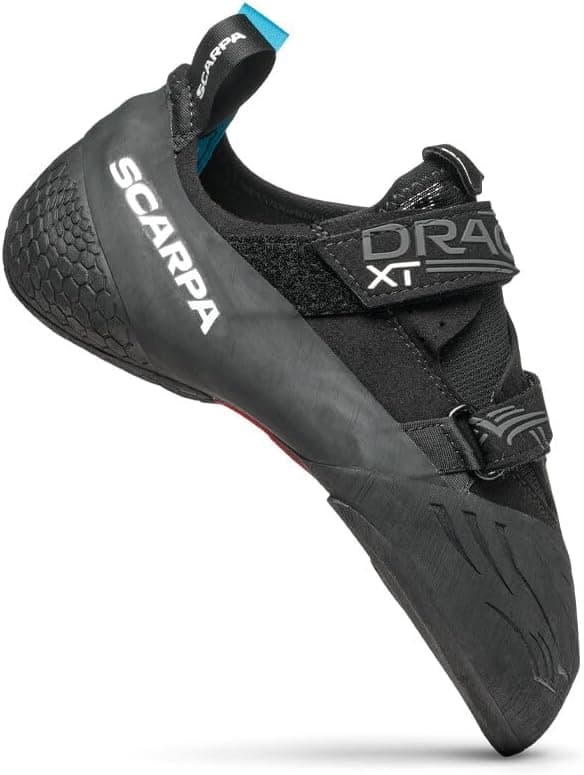
SCARPA's Drago XT is a soft, sensitive performance shoe built for steep bouldering and feeling small footholds.
Price range: See on Amazon
What we liked
- + Very sensitive design lets you feel tiny smears and volumes through the sole
- + Aggressive shape excels at toe hooks and heel hooks on overhanging problems
- + Premium SCARPA construction targets advanced boulderers pushing hard grades
Trade-offs
- - Soft build tires the feet on long vertical routes that need edging support
- - Aggressive fit is uncomfortable for beginners and all-day wear
Who this shoe is built for
The Drago XT targets boulderers and sport climbers who already have some mileage on their feet and want maximum sensitivity on steep, technical terrain. Its downturned, highly asymmetric shape is the kind of profile climbers reach for on comp-style boulder problems, overhanging gym walls, and outdoor routes with pockets, volumes, and small smears. This is not a shoe for someone learning to climb or logging long days on moderate slab and vertical terrain, and SCARPA does not market it that way. The soft, precise construction rewards a climber who can already stand on small holds and wants to feel the rock through the sole rather than stand on top of it. Our score of 9 out of 10 reflects how completely it does that one job, aggressive bouldering and steep sport climbing, even though the same focus narrows the range of climbers and routes it suits.
The design in plain English
The upper is a microsuede and leather build with a seamless panel over the big toe, wrapped in SCARPA's SRT system, an extremely soft rubber layer that lets the forefoot mold around volumes and toe hooks. A PCB-Tension system runs through the midfoot to keep power directed at the toe without stiffening the whole shoe. Underneath sits a 3.5 millimeter Vibram XS Grip 2 sole, a soft, high-friction rubber compound chosen for grip over edging precision, paired with a full 3 millimeter rubber heel with a laser-etched texture for hooking. Two hook-and-loop straps close the shoe instead of laces, which suits the low-volume, slipper-style fit and makes it fast to pull on and off between boulder attempts. SCARPA lists the shoe in European sizes 35 through 45 in half sizes, with a reference weight of about 200 grams for one shoe in a size 41.
Living with the fit and the break-in
SCARPA's own sizing guidance is that the Drago XT fits true to size rather than needing the aggressive downsizing some performance shoes require, which is worth noting before ordering a size down out of habit. Expect the soft microsuede upper to relax and mold to your foot over the first several sessions, typical of unlined leather-and-microsuede performance shoes. Because the shoe leans so heavily on sensitivity, it rewards being pulled on right before you climb and taken off between burns rather than worn all session, which also keeps the soft rand and heel rubber from picking up unnecessary wear. As with any climbing shoe, keep it away from prolonged sun and heat when stored, and follow the manufacturer's care guidance for cleaning the upper rather than machine washing it.
Trade-offs and how it compares
The same softness that makes the Drago XT so sensitive on volumes and toe hooks works against it on long vertical pitches that reward hard edging, where a stiffer shoe holds a small foothold with less foot fatigue. Climbers who spend most of their time on vertical face routes rather than steep bouldering may prefer something with more platform underfoot. The aggressive downturn and snug, low-volume fit also make it a poor choice for all-day wear or a first pair of shoes. Against rivals in the same bouldering category, the La Sportiva Solution is a similarly aggressive option with a stiffer platform that some climbers find more supportive on marginal edges, while the SCARPA Vapor V sits a step down in aggressiveness and can suit climbers who split time between bouldering and vertical sport routes.
Verdict and who should look elsewhere
The Drago XT earns its place as a specialist shoe: pick it if your climbing is mostly steep bouldering, comp-style gym problems, or sport routes with pockets and volumes where sensitivity and toe hooking matter more than edging power. Skip it if you are new to climbing, spend most of your time on vertical or slabby terrain, or need one shoe to wear comfortably for hours at a time, since the soft build and aggressive shape work against all three. Climbers in that position are better served by a flatter, stiffer shoe built for edging and all-day comfort, saving a shoe like this for when technical bouldering becomes the priority.
Frequently asked questions
Does the SCARPA Drago XT run true to size?
SCARPA states the Drago XT fits true to size rather than requiring the aggressive downsizing common with other performance shoes, so many climbers order close to their street shoe size and let the microsuede upper mold in.
Is the Drago XT good for vertical edging or trad routes?
Not particularly. Its soft SRT rubber and downturned shape are tuned for sensitivity on steep, technical terrain, and the softness tires the foot faster than a stiffer shoe on long vertical pitches that demand hard edging.
Can a beginner wear the Drago XT?
It is not the best starting point. The aggressive downturn and low-volume, hook-and-loop fit are built for climbers who already have technique to spare, and beginners are generally better off in a flatter, more comfortable shoe.
How does the Drago XT close and adjust?
Two hook-and-loop straps handle closure instead of laces, which keeps the low-profile fit intact and makes the shoe fast to put on and pull off between climbs.
Prices change often, so check the current price and availability on Amazon.
Check price on AmazonClimbing Nest may earn a commission from the link above.