Meister Boulder Beast XL Tri-Fold Rock Climbing Crash Pad with Backpack Straps - 72 x 44 x 5 - Black Review (2026)
Updated September 14, 2026 · Research-based review
Our verdict
The Boulder Beast XL suits boulderers who climb highballs or steep terrain where a normal pad leaves gaps. Its 72 x 44 inch landing area and four foam layers cover a lot of ground, but the size and weight make it a poor fit for anyone hiking long approaches solo.
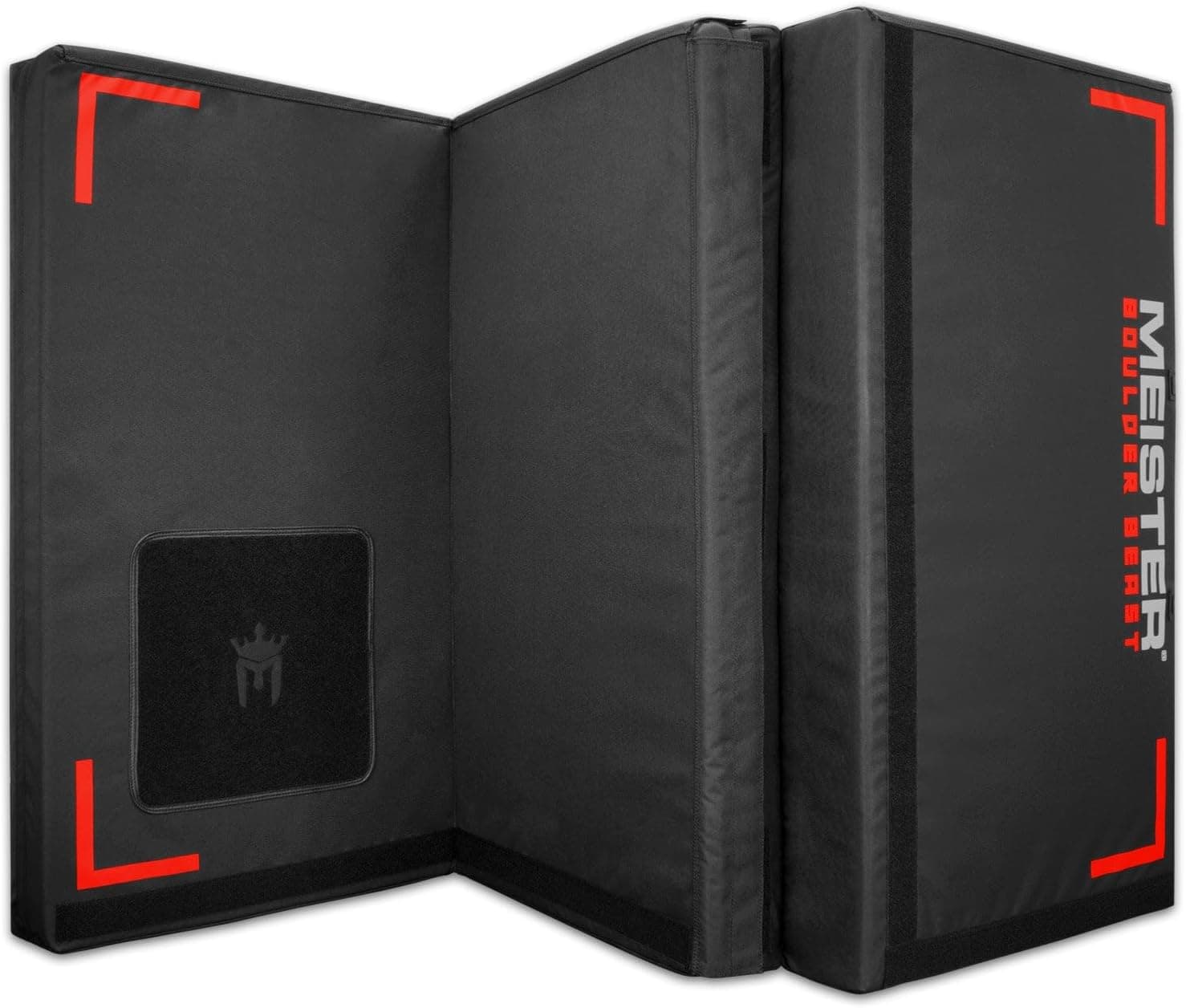
Meister's Boulder Beast XL tri-fold crash pad at 72 x 44 x 5 in black, a huge pad for highballs and rough landings.
Price range: See on Amazon
What we liked
- + 72 x 44 x 5 size covers large landing zones
- + Tri-fold layout keeps the surface flat without a gap
- + Backpack straps make carrying such a big pad manageable
Trade-offs
- - Very heavy and bulky for long approaches
- - Takes up a lot of space in the car or home
Who this crash pad is built for
The Boulder Beast XL is aimed at boulderers who regularly climb tall or awkward problems where a standard pad does not cover the fall zone. Unfolded, it measures 72 by 44 inches with 5 inches of total cushioning, giving a landing area big enough to catch off-angle falls or protect a second climber standing nearby. Gym climbers moving outdoors for the first time will appreciate the extra margin for error, and anyone who boulders with a small crew and needs one pad to do the work of two will get the most value here. It is less suited to climbers who mostly hop between short, low boulders close to the car, since the bulk and weight are wasted on easy terrain. Pair it with a spotter rather than treating the size as a substitute for careful landing technique on genuinely tall problems.
Foam layout and how the tri-fold works
Each panel of the pad uses four layers of mixed open and closed cell foam stacked to the full 5 inch thickness, a combination meant to absorb the initial shock of a fall while still returning enough support that climbers do not bottom out on hard impacts. The tri-fold design lets the pad open flat without the visible gap that hinge-style pads can leave at the fold lines, which matters most on problems where a fall could land a climber right on that seam. Hook and loop flaps run along the sides so this pad can be linked to others, useful for covering wide or irregular landing zones at the base of a boulder. The outer shell is a reinforced all-weather polyester, and a carpet square is stitched into one corner so climbers can wipe their shoes before stepping onto the send zone.
Carrying it and living with the size
Folded down, the pad shrinks to roughly 24 by 44 by 15 inches, still a large package that needs a car with real trunk or back seat space. Removable backpack straps with a chest strap and hip belt let one person carry it on shorter approaches, and duffle-style handles with a comfort grip give a second carry option for tight trailheads or loading it into a gym bag drop-off. At home, a pad this size takes up meaningful floor or wall space, so climbers without a garage or mudroom should plan storage before buying. Cleaning is mostly about brushing off dirt and letting the shell air dry, since a foam-and-fabric pad like this should never be machine washed or soaked, and owners should follow the manufacturer's care guidance rather than improvising with detergent.
Trade-offs against other crash pads
Against the Asana Superhero and Asana Hero pads, which use a triple layer dual density foam in smaller footprints, the Boulder Beast XL trades some packability for sheer coverage, a fair trade for climbers who prioritize landing area over trunk space. Compared with the Black Diamond Circuit, a lighter and more compact pad aimed at approach-heavy days, the Meister pad is clearly the better choice for a home base pad at a popular boulder but a worse choice for anyone hiking miles to remote problems. The core trade-off is simple: this pad wins on coverage and loses on portability. Climbers who boulder mostly at roadside areas or gyms-adjacent outdoor spots get the full benefit, while those doing long backcountry approaches will feel every extra pound on the straps.
Verdict for different types of buyers
Choose the Boulder Beast XL if the goal is one pad that covers a big landing zone for highball or awkward-fall terrain, or if a small group wants to combine pads using the hook and loop side flaps instead of buying several smaller ones. Skip it if trips involve long hikes where every pound matters, or if storage space at home is already tight, since this is one of the larger tri-fold pads on the market. Climbers weighing this against the pricier Asana models should note the Meister pad covers more ground for a lower position in that lineup, which fits the site's assessment of it as strong on fit for the job and features, with value held back mainly by its bulk rather than any flaw in the foam or stitching.
Frequently asked questions
How thick is the Meister Boulder Beast XL crash pad?
It has 5 inches of total cushioning per panel, built from four layers of mixed open and closed cell foam.
What are the folded dimensions for storage or transport?
Folded, the pad measures roughly 24 by 44 by 15 inches, which still needs a full trunk or a dedicated storage spot at home.
Can this pad be connected to other crash pads?
Yes, hook and loop fastening flaps along the sides let it link up with other pads to cover wider or irregular landing zones.
How should the pad be cleaned and cared for?
Brush off dirt and let the polyester shell air dry rather than machine washing or soaking it, and follow the manufacturer's care instructions for the foam core.
Prices change often, so check the current price and availability on Amazon.
Check price on AmazonClimbing Nest may earn a commission from the link above.